
 English
 Español
 عربى
عربى

Content
Absolutely, motorcycle cylinders can often be repaired depending on the type and severity of damage. Here's a practical breakdown:
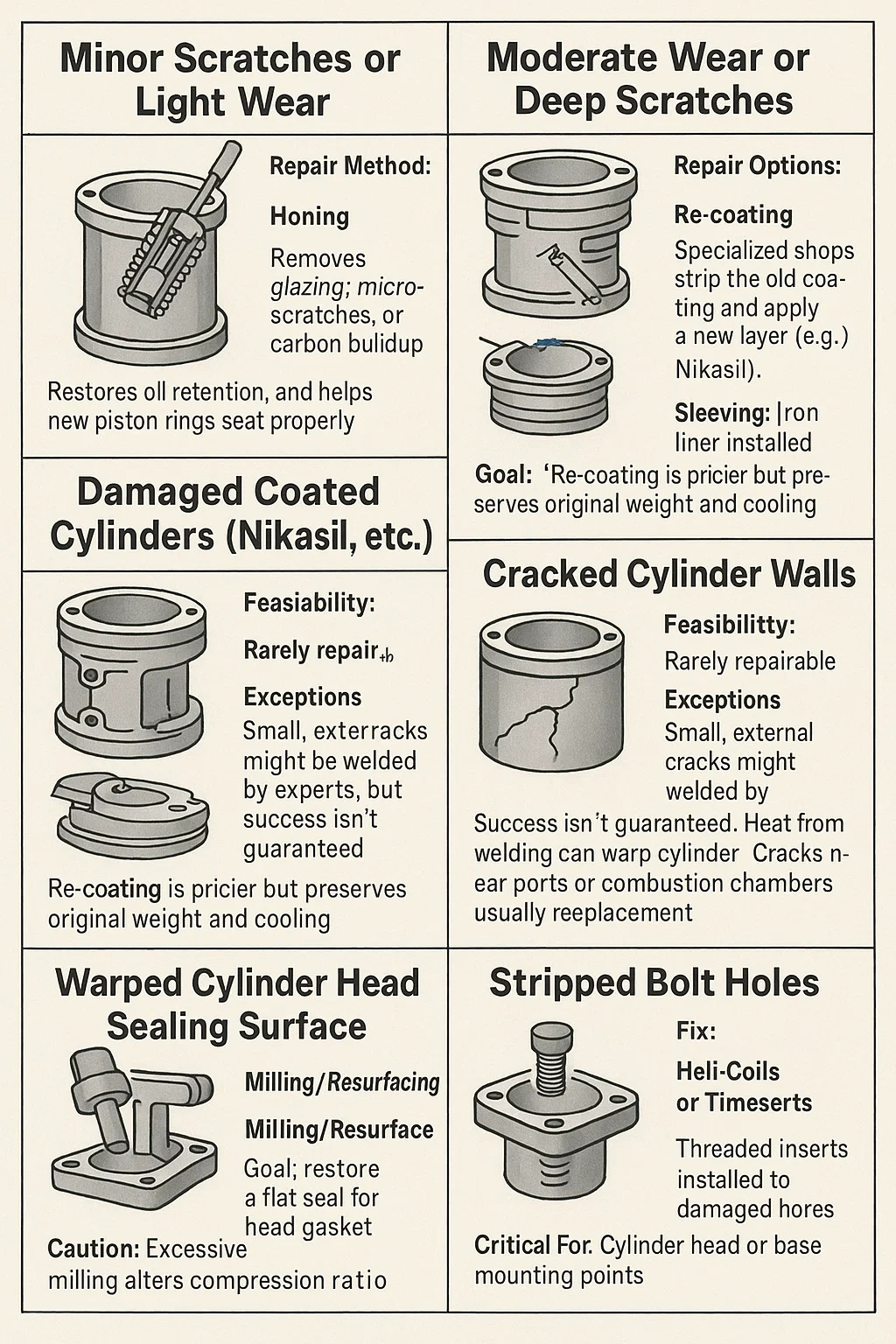
1. Minor Scratches or Light Wear
Repair Method: Honing
A honing tool lightly scrubs the cylinder walls to create a fresh crosshatch pattern.
Removes glazing, micro-scratches, or carbon buildup.
Purpose: Restores oil retention and helps new piston rings seat properly.
Limitations: Only works if the cylinder is still within factory diameter tolerances. Deep gouges require more aggressive fixes.
2. Moderate Wear or Deep Scratches
Repair Method: Overboring + Sleeving
Overboring: The cylinder is machined to a larger diameter to eliminate damage.
Sleeving: A new iron liner (sleeve) is pressed into the bored-out cylinder.
Result: Returns the cylinder to standard (or larger) bore size with a fresh surface.
Common Use: Classic bikes, heavily worn engines, or cases where original cylinders are rare/expensive.
3. Damaged Coated Cylinders (Nikasil, etc.)
Repair Options:
Re-coating: Specialized shops strip the old coating and apply a new layer (e.g., Nikasil).
Sleeving: Iron liner installed after boring (common for DIY repairs).
Note: Re-coating is pricier but preserves the original weight and cooling.
4. Cracked Cylinder Walls
Feasibility: Rarely repairable.
Exceptions: Small, external cracks might be welded by experts, but success isn't guaranteed.
Risk: Heat from welding can warp the cylinder. Cracks near ports or combustion chambers usually mean replacement.
5. Warped Cylinder Head Sealing Surface
Repair Method: Milling/Resurfacing
Machine shop shaves a thin layer off the cylinder's top surface.
Goal: Restores a flat seal for the head gasket.
Caution: Excessive milling alters compression ratio and valve timing.
6. Stripped Bolt Holes
Fix: Heli-Coils or Timeserts
Threaded inserts installed to reinforce damaged holes.
Critical For: Cylinder head or base mounting points.