
 English
 Español
 عربى
عربى

Content
- 1 Engine and Cylinder Specifications: The Core of the R1M
- 2 Cylinder Head Design and Valvetrain Architecture
- 3 Fuel Delivery and Intake System: Feeding Four Cylinders at 14,000 RPM
- 4 Chassis, Suspension, and Frame Specifications
- 5 Electronics Package: IMU-Based Control Systems
- 6 Braking System: Brembo Monobloc and Carbon-Ceramic Capability
- 7 Yamaha R1 vs R1M: Cylinder and Engine Differences
- 8 Cylinder Maintenance Intervals and Service Requirements
- 9 Wheel and Tire Specifications
- 10 Yamaha R1M Performance Data and Real-World Testing
- 11 Development History: From MotoGP M1 to Production R1M
The Yamaha R1M is the pinnacle of Yamaha's YZF superbike line — a street-legal MotoGP replica built around a 998cc inline-four cylinder engine that produces 200 PS at 13,500 rpm. Every specification on the R1M traces back to one goal: transfer Yamaha's Factory Racing knowledge directly into a production motorcycle. This article breaks down the full yamaha r1m specs, with particular focus on the Yamaha motorcycle cylinder architecture that makes this machine exceptional.
Engine and Cylinder Specifications: The Core of the R1M
The engine fitted to the Yamaha R1M is a crossplane-crankshaft, DOHC, forward-inclined parallel four-cylinder unit. Yamaha engineers refer to this internally as the CP4 configuration — crossplane four — and it is the defining mechanical signature of the R-series superbike. The cylinders are tilted forward at a steep angle inside the frame to lower the center of gravity and centralize mass.
Bore-Stroke Ratio and What It Means
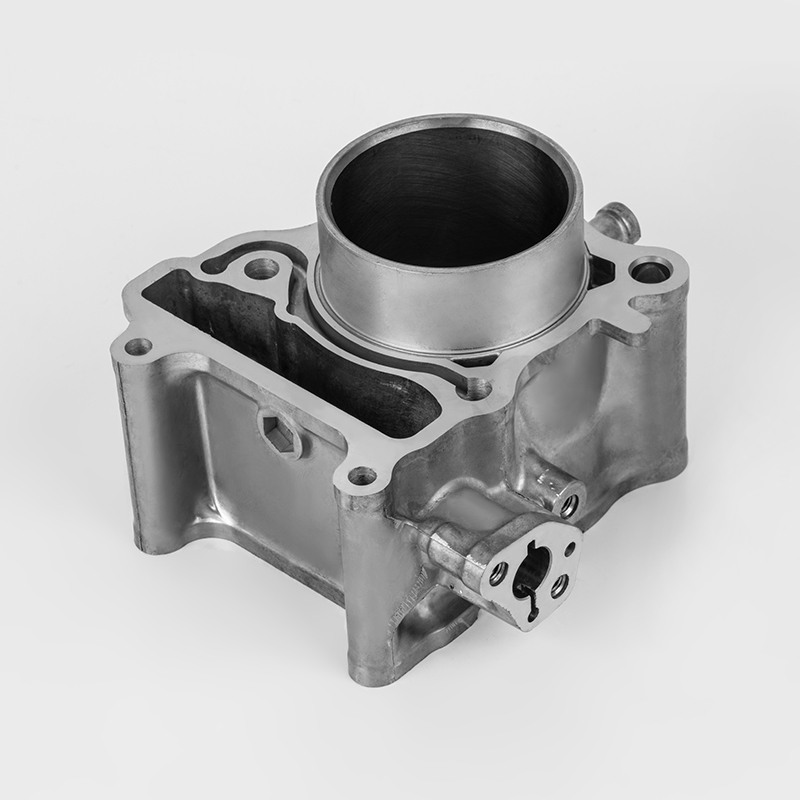
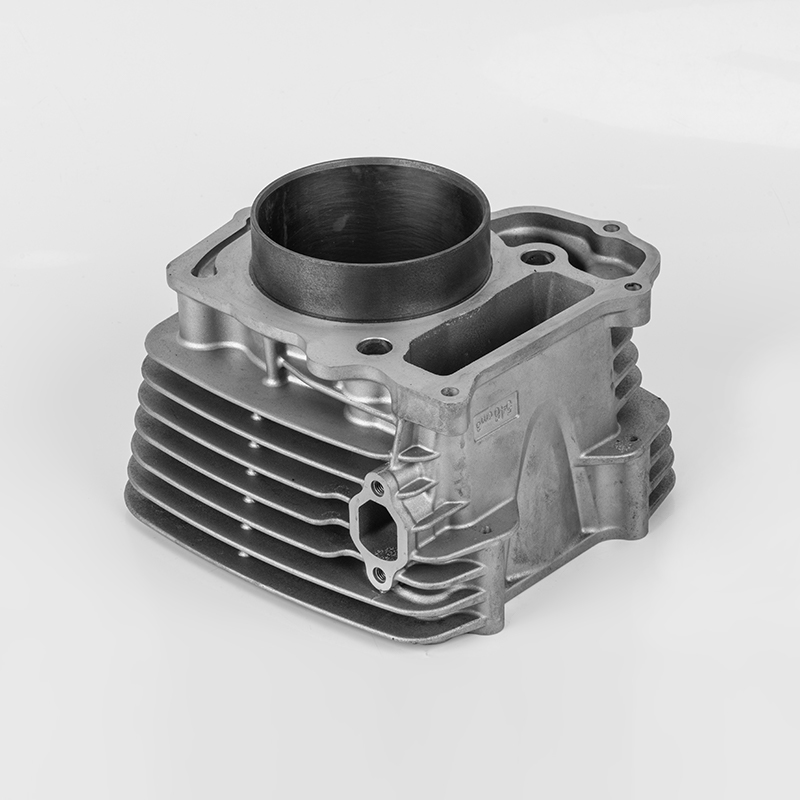
With a bore of 79.0 mm and a stroke of 50.9 mm, the R1M's Yamaha motorcycle cylinder is distinctly oversquare — bore is wider than stroke. An oversquare ratio favors high-revving performance: the shorter stroke reduces piston travel time per cycle, which allows the engine to spin to higher rpm without the mechanical stresses that destroy long-stroke engines at the top of the rev range. The R1M's redline sits at approximately 14,000 rpm in race trim.
This same bore-stroke philosophy is used across Yamaha's MotoGP M1 engine program. When Yamaha's competition department developed the production R1M, the bore and stroke dimensions were deliberately chosen to mimic the short-stroke, wide-bore character of prototype racing engines. The result is an engine that requires high revs to deliver peak output but rewards riders who keep it spinning in the upper portion of the tachometer.
Crossplane Crankshaft: Firing Order Engineering
Conventional inline-four engines use a flat-plane crankshaft, which spaces crank pins 180 degrees apart. This creates firing intervals of 180-180-180-180 degrees — equal spacing that produces a smooth power delivery but also creates overlapping power pulses that many riders find difficult to modulate at corner exits.
The R1M's crossplane crankshaft spaces the crank pins at 90-degree intervals. The firing order becomes 270-180-90-180 degrees — irregular, like a V4 or twin — which separates the torque pulses and creates a more linear, controllable rear tire feel. Valentino Rossi famously credited this engine character with helping him adapt from Ducati's V4 to Yamaha's M1 in MotoGP. The production R1M inherits this exact crank geometry.
Cylinder Head Design and Valvetrain Architecture
Each Yamaha motorcycle cylinder on the R1M is fed by a titanium intake valve system. The R1M runs four valves per cylinder — two intake, two exhaust — for a total of 16 valves across the engine. The intake valves measure 31.5 mm in diameter; the exhaust valves are 24.5 mm. Both sets are actuated by dual overhead camshafts driven by a gear-train primary drive, not a chain, which eliminates chain stretch and reduces maintenance intervals compared to conventional cam-chain systems.
Valve timing is a critical variable in cylinder head performance. The R1M's intake valves open 42 degrees before top dead center and close 75 degrees after bottom dead center. Exhaust valves open 57 degrees before bottom dead center and close 20 degrees after top dead center. This aggressive overlap — where both intake and exhaust valves are simultaneously open — is designed to maximize cylinder scavenging at high rpm, pulling fresh charge in while evacuating burnt gases efficiently.
| Parameter | Intake | Exhaust |
|---|---|---|
| Valve Diameter | 31.5 mm | 24.5 mm |
| Opens (BTDC/BBDC) | 42° BTDC | 57° BBDC |
| Closes (ABDC/ATDC) | 75° ABDC | 20° ATDC |
| Material | Titanium | Steel |
Pneumatic Valve System (PVS)
One of the most technically impressive features of the R1M is its pneumatic valve return system — borrowed directly from MotoGP prototype machinery. Conventional street motorcycles use coil springs to return valves to their closed position after the cam lobe passes. At extreme rpm, coil springs can experience float, where the spring's own resonance frequency is exceeded and the valve does not fully close, causing power loss and potential mechanical damage.
The R1M replaces coil springs with pressurized nitrogen cylinders acting on each valve. Nitrogen at approximately 7 bar provides consistent valve closure force regardless of engine speed. This allows the Yamaha motorcycle cylinder to rev freely beyond 13,000 rpm without valve float. The pneumatic system also eliminates the mass of the coil spring assembly, reducing reciprocating weight in the cylinder head and contributing to faster revving response.
Yamaha's MotoGP program has run pneumatic valve systems since the early 2000s. Bringing this technology to the R1M required engineering the nitrogen reservoir into the engine packaging without exceeding the weight targets. The solution was to integrate the nitrogen circuit into the cam cover casting itself.
Fuel Delivery and Intake System: Feeding Four Cylinders at 14,000 RPM
Each Yamaha motorcycle cylinder on the R1M is served by dual fuel injectors — 12 injectors total. The primary injectors sit below the throttle body and handle fueling at low-to-medium engine loads. A second set of injectors is positioned in the airbox upstream of the throttle slides, spraying fuel directly into the incoming airstream at high throttle openings. This arrangement ensures precise fuel atomization across the entire load range without the compromises of a single-injector setup.
Throttle body diameter is 47 mm per cylinder. Each body is controlled by Yamaha's YCC-T (Yamaha Chip Controlled Throttle) ride-by-wire system. There is no mechanical cable connecting the throttle grip to the throttle slides. Instead, the rider's input is read by a sensor and interpreted by the ECU, which then commands servo motors to open the throttle slides to the calculated angle.
YCC-I: Variable Intake Funnel Length
The R1M also features Yamaha Chip Controlled Intake (YCC-I), a variable intake funnel system. Each cylinder's intake funnel can change its effective length depending on engine rpm. At lower revs, longer intake funnels improve torque by taking advantage of intake charge inertia. At high rpm, shorter funnels reduce intake restriction and allow the engine to breathe more freely.
The transition between long and short funnel modes happens automatically around 9,000 rpm. This allows the R1M to maintain strong midrange pulling power — which is critical for corner exit — while still achieving maximum power at the top of the rev range. Variable intake geometry is a feature typically reserved for race machinery; the R1M's inclusion of YCC-I is a direct consequence of its MotoGP development lineage.
The airbox itself is pressurized via two ram air intakes built into the front fairing nose. At speed, dynamic air pressure forces air into the airbox, increasing effective intake pressure above ambient atmospheric. At 200 km/h (approximately 124 mph), the pressurized airbox provides a meaningful increase in intake charge density, contributing to the R1M's claimed power figure. The ram air ducts are dimensioned to provide optimum pressure recovery at the speed range the bike operates on a circuit.
Chassis, Suspension, and Frame Specifications
The R1M uses a Deltabox aluminum frame — a twin-spar design that connects the steering head directly to the swingarm pivot without intermediate structural members. Yamaha pioneered this frame concept in the 1980s on the FZR series and has refined it across every R-series generation. The frame's rigidity is asymmetric by design: the left and right spars have different stiffness profiles to account for the asymmetric loads imposed by chain drive and the forces transmitted through the rear suspension linkage.
- Ohlins NPX 43mm forks
- 43 mm inner tube diameter
- 120 mm wheel travel
- Pressurized nitrogen chamber
- Electronic adjustment (ERS)
- Ohlins TTX unit
- Linked via aluminum rocker
- 120 mm wheel travel
- Through-rod design
- Electronic adjustment (ERS)
Ohlins Electronic Racing Suspension (ERS)
The R1M is equipped exclusively with Ohlins Electronic Racing Suspension — a fully active system that reads IMU data at 125 Hz and adjusts damping force in real time. This is the key hardware difference separating the R1M from the standard R1. Both bikes share the same engine and frame, but the R1M's Ohlins ERS provides adaptive damping that the standard R1's conventional Ohlins units cannot match.
The ERS system reads six-axis inertial data from Yamaha's IMU (Inertial Measurement Unit) — which measures pitch, roll, yaw, and acceleration in three planes — and uses this data to predict suspension requirements moments before the suspension actually moves. When the system detects the bike entering a corner, it pre-loads the appropriate damping profile for cornering. When braking forces shift weight forward, the front fork damping stiffens to resist dive while the rear unit softens to maintain tire contact.
Geometry Specifications
| Geometry Parameter | Specification |
|---|---|
| Wheelbase | 1,405 mm |
| Rake Angle | 24.0 degrees |
| Trail | 96 mm |
| Seat Height | 860 mm |
| Fuel Tank Capacity | 17 liters |
| Wet Weight | 202 kg |
Electronics Package: IMU-Based Control Systems
The R1M's electronics suite is built around a six-axis IMU from Bosch. This unit feeds real-time attitude data — lean angle, pitch rate, yaw rate, and longitudinal and lateral acceleration — to the R1M's ECU continuously. Every active rider aid uses this data stream as its primary input, allowing the control systems to respond to the actual dynamic state of the motorcycle rather than relying on throttle position or wheel speed alone.
Active Rider Aids
- Traction Control (TCS): 9-level adjustment. Monitors rear wheel slip using wheel speed sensors and lean angle from the IMU, then modulates ignition timing and throttle position to reduce slip. Level 1 permits the most slip; Level 9 is most aggressive in limiting slip.
- Slide Control (SCS): Specifically manages rear wheel sliding at lean angles. Where TCS reduces all rear wheel slip, SCS is calibrated to permit controlled drift within a defined slip angle envelope — permitting MotoGP-style cornering styles without catastrophic oversteer.
- Launch Control (LCS): 3-level selection. Sets the throttle opening rate and ignition timing during standing starts to maximize drive traction without wheelspin. At the highest level, launch control also monitors front wheel lift via the IMU and limits power if the front wheel rises excessively.
- Lift Control (LIF): Monitors front wheel speed via the IMU and suppresses excessive wheelie. 3-level selection allows the rider to choose how aggressively front wheel lift is limited — Level 3 permits the most lift before intervention.
- Brake Control (BC): Linked to the IMU, it adjusts ABS thresholds based on lean angle. Conventional ABS assumes an upright motorcycle; the R1M's lean-sensitive ABS permits harder braking while leaned without premature ABS activation.
- Front Brake Slide Control: Specifically manages front wheel lockup-induced tucking by monitoring lean angle and deceleration simultaneously.
- Power Mode (PWR): 5 modes adjusting the ECU's power delivery map. Mode 1 delivers full power with a linear throttle map; Mode 5 reduces peak power and softens throttle response for wet conditions.
- Quick Shift System (QSS): Bidirectional quickshifter allowing clutchless upshifts and downshifts under both acceleration and deceleration. The system auto-blips the throttle on downshifts to match engine speed to the lower gear ratio.
Data Logging and Connectivity
Every R1M ships with a data logging system capable of recording IMU data, GPS track data, engine parameters, and suspension position at 125 Hz. The system stores data on an internal memory module. Yamaha provides the MY17 or MY-ride app, which allows riders to download and analyze session data on a smartphone. The logged data includes lean angle traces, throttle position, brake pressure, engine rpm, and the outputs of every active control system — allowing riders to correlate their inputs with control system activity and identify setup improvements.
GPS data is particularly useful: the software overlays lean angle traces and control system intervention events on a track map, allowing riders to see precisely where the bike activates traction control or reduces power, and whether those interventions are helping or constraining lap time. This is functionality that was previously available only through aftermarket data logging systems costing thousands of dollars.
Braking System: Brembo Monobloc and Carbon-Ceramic Capability
- Brembo Monobloc M50 calipers
- 320 mm floating discs (x2)
- Radial-mount caliper position
- Radial-pump master cylinder
- IMU-coupled lean-sensitive ABS
- Single Brembo caliper
- 220 mm disc
- Foot pedal actuation
- ABS active at all lean angles
The Brembo Monobloc M50 four-piston radial calipers are the same units found on factory-level superbike racing machinery. The monobloc design — machined from a single aluminum billet rather than assembled from two halves — eliminates the flex and fluid displacement that occurs with bolted two-piece calipers under extreme braking loads. Bite is immediate, feedback is direct, and modulation at the friction limit is the kind that allows riders to trail brake deep into corners without surprise lock-up.
Disc diameter is 320 mm front, floating design. The floating disc uses an aluminum carrier with stainless steel braking surfaces connected via floating pins that allow the braking surface to expand thermally without warping the disc or transmitting heat to the wheel bearing. Under repeated heavy braking on circuit — the kind of abuse the R1M is designed for — fixed discs can develop hot spots and warp, causing pedal pulsation. Floating discs remain flat and consistent across thermal cycles.
Yamaha R1 vs R1M: Cylinder and Engine Differences
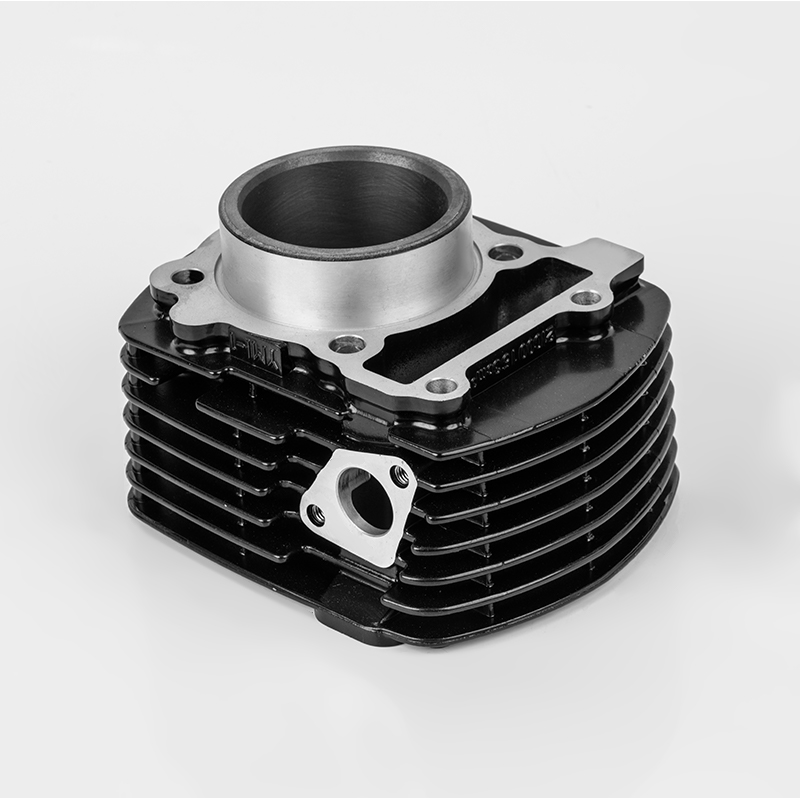
Both the standard Yamaha R1 and the R1M share the same fundamental Yamaha motorcycle cylinder block — same 998cc displacement, same 79.0 mm bore, same 50.9 mm stroke, same crossplane crankshaft. The differences between the two motorcycles are concentrated in peripheral systems, electronics, and suspension rather than in the cylinder architecture itself. This is a deliberate engineering decision: Yamaha wanted the production R1 to carry the same core cylinder hardware as the M to preserve the engine character that the M is known for.
| Feature | Yamaha R1 | Yamaha R1M |
|---|---|---|
| Cylinder Displacement | 998cc | 998cc |
| Bore x Stroke | 79.0 x 50.9 mm | 79.0 x 50.9 mm |
| Valve System | Coil spring | Pneumatic (PVS) |
| Front Suspension | KYB 43mm forks | Ohlins NPX ERS |
| Body Materials | Fiberglass/ABS | Carbon fiber bodywork |
| Data Logging | Basic ECU logging | Full GPS + IMU logging |
| Wet Weight | 200 kg | 202 kg |
The 2 kg weight difference is noteworthy given the R1M's additional electronic hardware — ECUs, actuators, nitrogen reservoir for the pneumatic valve system, and GPS antenna. The weight parity is achieved through the carbon fiber bodywork package, which replaces the heavier fiberglass and ABS panels of the standard R1. The R1M's fairing, rear seat unit, and front fender are all carbon fiber. Carbon fiber's stiffness-to-weight ratio also improves aerodynamic panel precision at high speed, since stiffer panels deflect less under aerodynamic load and maintain their designed shape more accurately.
Cylinder Maintenance Intervals and Service Requirements
The R1M's Yamaha motorcycle cylinder requires more frequent inspection intervals than most street motorcycles due to the racing-derived internal specifications. Yamaha's official service schedule specifies valve clearance inspection every 16,000 km — half the interval of many production motorcycles. The tight tolerance between the cam lobe and valve shim in a high-performance engine like this means that small deviations in clearance have a larger effect on performance and valve longevity.
Valve Clearance Specifications
| Valve | Min Clearance | Max Clearance |
|---|---|---|
| Intake | 0.11 mm | 0.20 mm |
| Exhaust | 0.20 mm | 0.29 mm |
Oil and Lubrication Requirements
Yamaha specifies 10W-40 or 20W-50 JASO MA2-rated motorcycle oil for the R1M. The JASO MA2 rating ensures the oil is compatible with wet clutch systems — passenger car oils with friction modifiers can cause clutch slip in motorcycle transmissions. For track use, many R1M owners use 5W-40 fully synthetic oils rated for high-temperature engine protection, as track sessions can elevate oil temperatures significantly above street operating ranges.
Oil change intervals are specified at 8,000 km for street use or annually, whichever comes first. For track day use, many experienced R1M owners change oil after every two to three track sessions regardless of mileage, as thermal and shear stress degrades oil significantly faster on circuit than on the street. The R1M's oil cooler — a mandatory fitment given the engine's heat output — is located behind the front fairing lower sections and receives cooling airflow even at slow speeds via ducting.
Pneumatic Valve System Servicing
The pneumatic valve system's nitrogen charge is factory-set at approximately 7 bar. Yamaha recommends checking nitrogen pressure at each major service interval (every 40,000 km or as specified). Nitrogen pressure loss over time is minimal if the seals are intact — unlike coil spring systems, the pneumatic circuit has no mechanical wear components except the valve stem seals. If nitrogen pressure drops below the minimum specified value, the system's effective valve return force decreases, which can lead to valve float at high rpm. Nitrogen recharging requires a workshop with the appropriate charging kit and gauge.
Wheel and Tire Specifications
The R1M ships with Bridgestone Battlax RS11 tires as OEM fitment. These are a racing-compound road tire, not a touring compound, which means they require warm-up laps to achieve full grip, have a shorter service life than touring tires, and provide noticeably superior feedback and grip when operating within their thermal window. Front tire diameter is 120/70 ZR17; rear is 190/55 ZR17. The 190 section width rear tire is wider than many superbikes of the same period, providing a larger contact patch for better traction under the engine's power output.
The forged aluminum wheels reduce unsprung mass compared to cast aluminum wheels. Lower unsprung mass improves the suspension's ability to follow road surface irregularities, as the wheel and tire assembly is lighter and therefore easier for the spring and damper to control. The weight saving from forged vs. cast wheels on the R1M is approximately 0.5 kg per wheel — modest in absolute terms, but significant when the weight is located at the rim, where rotational inertia effects are most pronounced.
Yamaha R1M Performance Data and Real-World Testing
Published performance figures for the Yamaha R1M from independent testing organizations place 0-100 km/h acceleration at approximately 2.9 seconds. 0-200 km/h is achieved in roughly 6.8 seconds in favorable conditions. Top speed is electronics-limited on standard road settings but exceeds 299 km/h with the limiter deactivated in race mode.
At the Nurburgring, German motorcycle magazine Motorrad recorded R1M lap times consistent with dedicated superbike lap records in stock-class testing. The magazine noted that the ERS suspension's ability to adapt to the mixed-surface challenges of the Nordschleife — which includes sections with significantly different surface texture and grip levels — provided a meaningful advantage over motorcycles with conventional suspension.
UK magazine Motorcycle News (MCN) tested the R1M at Silverstone and reported that the IMU-linked ABS allowed riders to reduce braking distances by 5-8% compared to the same riders on the standard R1 with conventional ABS. The lean-sensitive ABS calibration allowed trail braking at lean angles that would trigger premature ABS intervention on non-IMU-linked systems, extending the trail braking window and allowing later turn-in points.
Cylinder Thermal Performance at Track Pace
The R1M's cylinder cooling system is water-cooled with a radiator positioned ahead of the engine and a thermostat-controlled pump. Under sustained track use, coolant temperature runs between 90 and 105 degrees Celsius. Oil temperature under similar conditions reaches 110-120 degrees Celsius — well within specification for the synthetic oils recommended for track use. The cylinder block and head are manufactured from aluminum alloy, which provides good thermal conductivity and transfers heat effectively to the coolant passages machined into the water jacket surrounding each cylinder.
The R1M features a coolant-fed oil cooler integrated into the cooling circuit. Hot oil from the sump is routed through a heat exchanger that transfers heat to the coolant circuit, keeping oil temperatures more stable than air-only oil coolers. This is important because oil viscosity changes with temperature — if oil runs too hot, viscosity drops below specification and film strength decreases, increasing wear on cylinder walls, bearing surfaces, and the valve train.
Development History: From MotoGP M1 to Production R1M
Yamaha introduced the crossplane inline-four concept on the YZF-R1 in 2009, making the R1 the first production motorcycle to feature a crossplane crankshaft in a four-cylinder engine. The motivation was to address a persistent criticism of the previous-generation R1 — that its power delivery was too abrupt at corner exits, causing rear wheel spin that was difficult to modulate. The 2009 crossplane R1 was widely praised for its tractability compared to both the previous-generation R1 and its competitors.
The R1M was first introduced in 2015, coinciding with a complete redesign of the R1 platform. The 2015 redesign brought the electronics suite — six-axis IMU, TCS, SCS, LIF — to the standard R1, but reserved the pneumatic valve system and Ohlins ERS for the M variant. This created a clear product hierarchy: the R1 offers genuine superbike performance with a competitive electronics package, while the R1M adds the pneumatic valve system and fully active suspension for riders who operate at or near the performance limit regularly.
Yamaha updated the R1M in subsequent model years with ECU calibration revisions and minor electronics refinements, but the fundamental Yamaha motorcycle cylinder architecture, crossplane crankshaft, and pneumatic valve system have remained unchanged since the 2015 introduction. This speaks to the maturity of the base cylinder design — Yamaha's engineers reached a point with the R1M's engine where further development gains require prototype-level engineering rather than incremental refinement of a fundamentally sound platform.
Positioning Against Competitors
In the liter-class superbike segment, the R1M competes directly with the BMW S1000RR M, Ducati Panigale V4 S, and Aprilia RSV4 Factory. Each takes a different approach to achieving similar performance targets. BMW uses a water-cooled inline-four with ShiftCam variable valve timing and BMW's own DDC (Dynamic Damping Control) active suspension. Ducati uses a V4 Desmosedici Stradale engine — a 90-degree V4 derived from their MotoGP Desmosedici — with Desmodromic valve actuation that eliminates valve return springs entirely. Aprilia uses a 65-degree V4 with conventional valvetrain and Ohlins smart EC 2.0 semi-active suspension.
The R1M's differentiation is its crossplane character — the torque pulse feel that comes from the 270-180-90-180 firing order — and the pneumatic valve system's ability to maintain consistent high-rpm performance over extended running. Riders who move from conventional inline-four motorcycles to the R1M consistently report that the engine feels more planted and easier to drive out of slow corners, which is precisely the attribute Yamaha targeted when developing the crossplane concept.