
 English
 Español
 عربى
عربى

Content
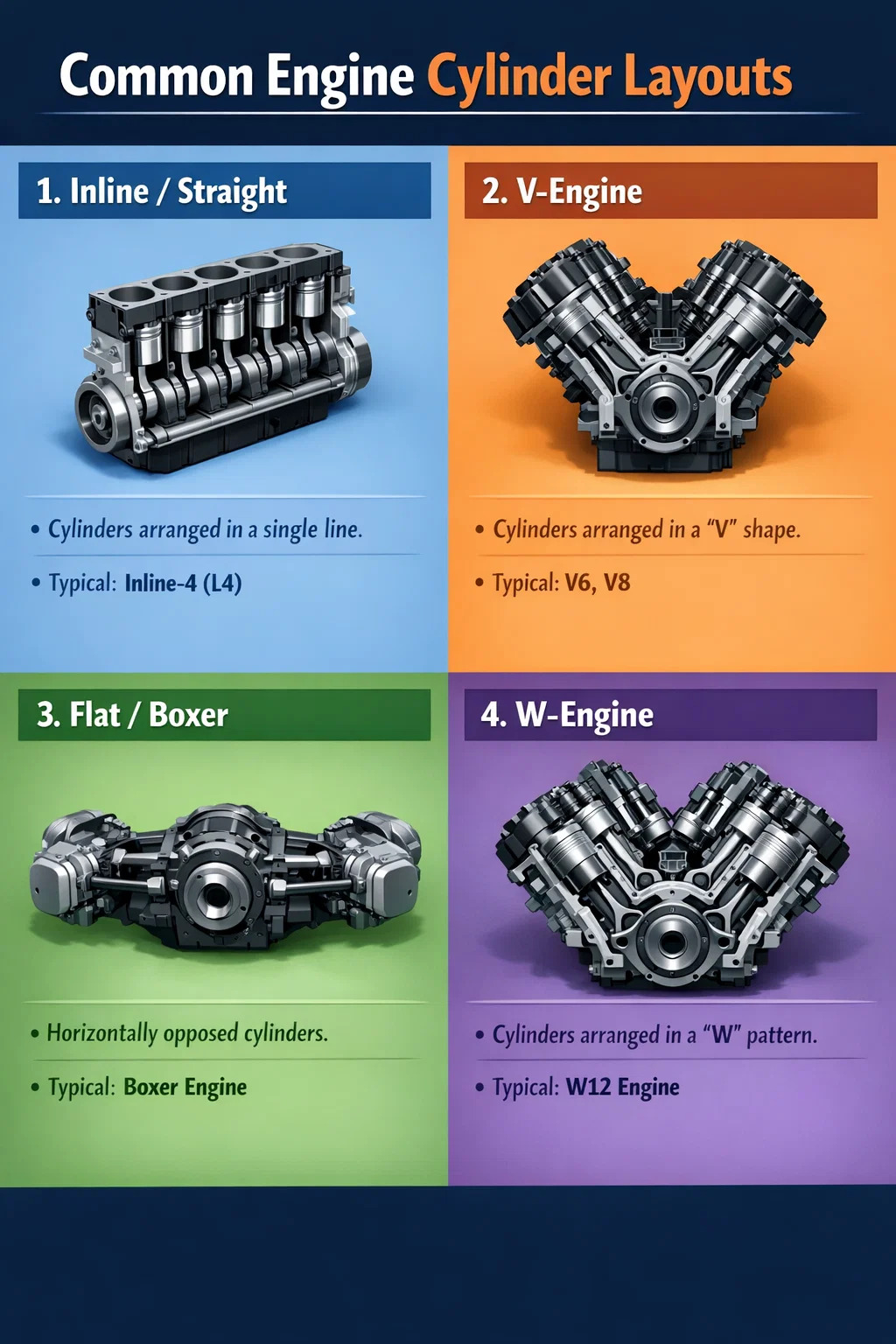
In the world of internal combustion engines, the arrangement of cylinders directly determines a vehicle's character, power output, and space requirements. The cylinder layout is a crucial aspect in both passenger cars and high-performance vehicles.
Here are some of the most common cylinder arrangements:
1. Inline/Straight
This is the most widely used layout. All cylinders are arranged neatly in a single line.
Features: Simple structure, low cost, and relatively easy to maintain because it only has one cylinder head.
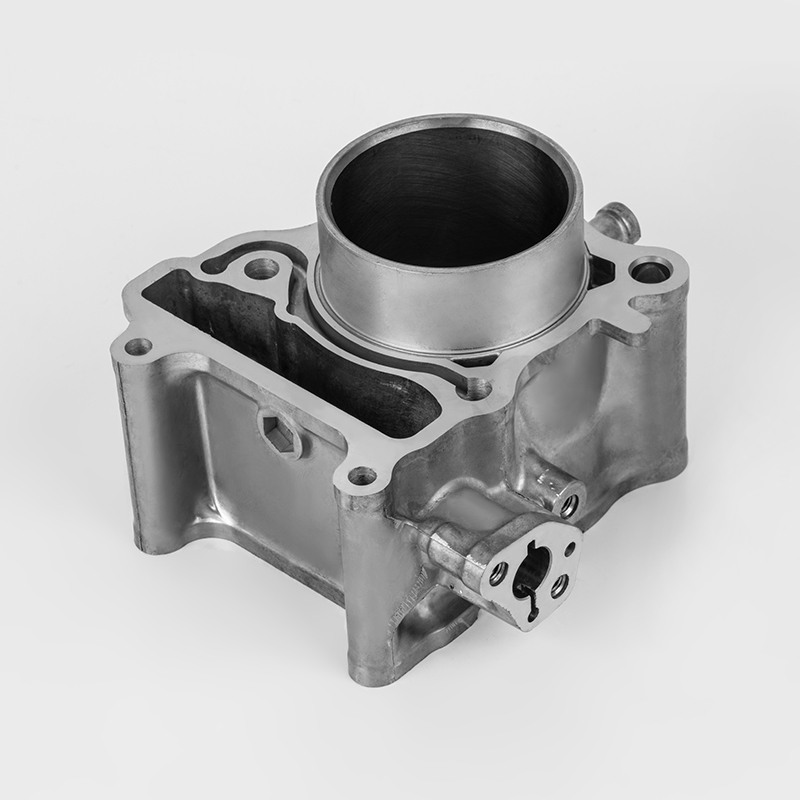
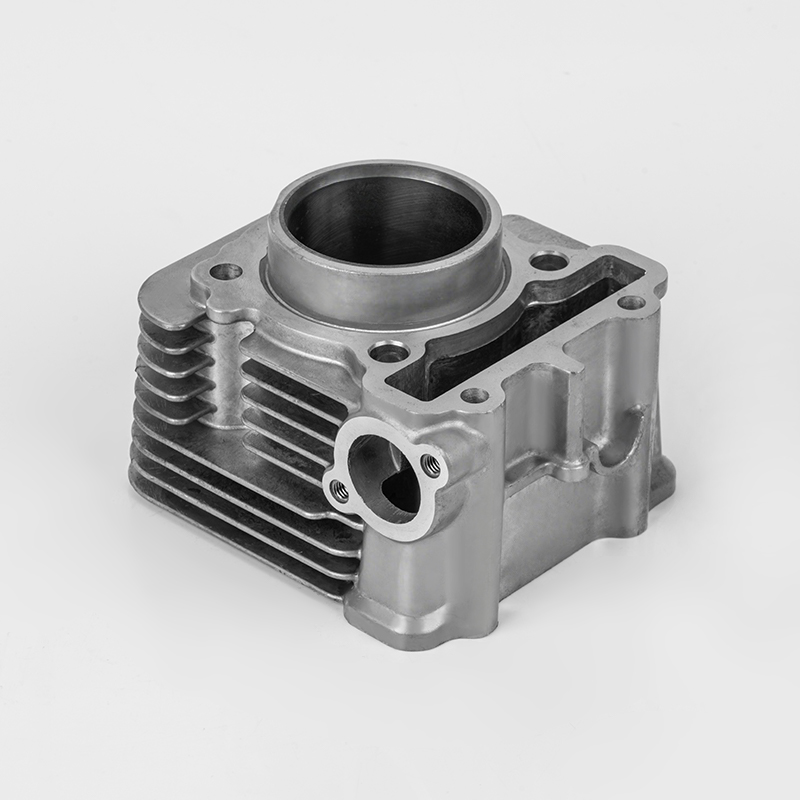
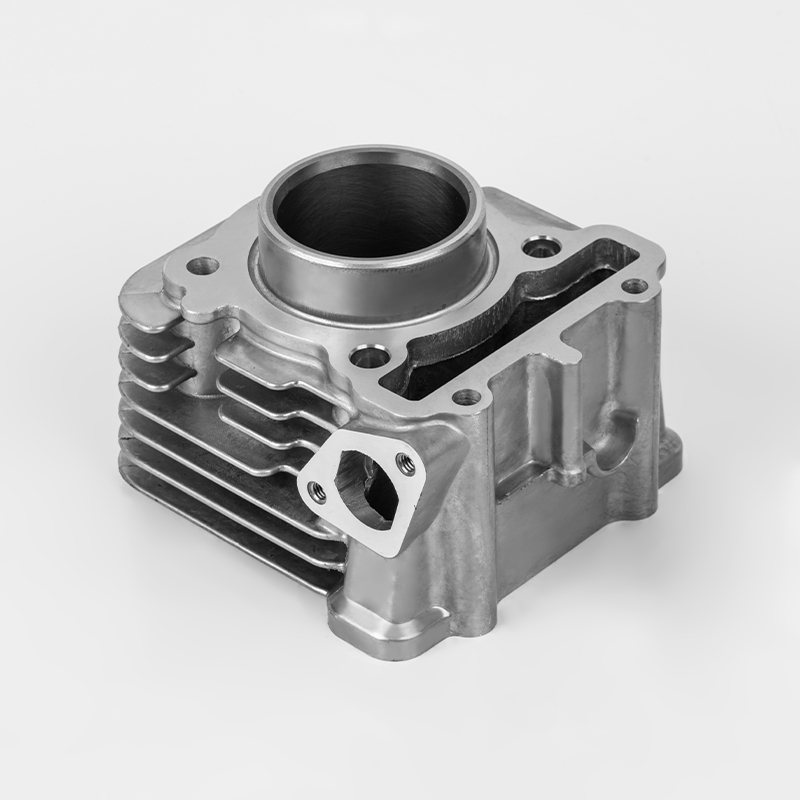
Applications: Most common four-cylinder engines (L4) use this layout. For motorcycle cylinders, the inline four-cylinder is also the "heart" of many sports motorcycles, providing very smooth power delivery.
2. V-Engine
If there are too many cylinders (e.g., 6 or 8), arranging them in a single line would be too long. Therefore, designers divide the cylinders into two groups, arranged diagonally like the letter "V".
Features: Shortens the engine length, making the structure more compact. This layout effectively cancels out some vibrations, and the sound is more powerful.
Applications: Commonly found in medium to large sedans or high-performance sports cars (such as V6, V8). In the motorcycle field, the V-twin is a classic, known for its unique rhythm and strong torque at low RPMs.
3. Flat/Boxer
Imagine two boxers standing back-to-back throwing punches to the sides; this is how a horizontally opposed engine works. The cylinders lie horizontally on either side of the crankshaft.
Features: Very low center of gravity, which significantly improves vehicle handling stability, like a tumbler toy.
Applications: This layout is relatively rare, with the most famous examples being Porsche and Subaru. In motorcycles, the famous "boxer" engine is also a prime example of this structure.
4. W-Engine
This can be seen as two V-engines combined. The cylinders are arranged in an interlocking pattern, resembling the letter "W".
Features: Allows for more cylinders to be fitted into a very small space, resulting in extremely powerful engines, but the structure is also very complex. Application: Typically found only in top-of-the-line luxury cars or supercars, such as those with W12 engines.