
 English
 Español
 عربى


Content
- 1 What Engine Displacement Actually Measures
- 2 Same Displacement, Different Engine: Why Bore and Stroke Split the Classes
- 3 How Bore Numbers Hide Inside Cylinder Part Names
- 4 Big-Bore Work: What the Arithmetic Allows and What the Metal Allows
- 5 Displacement Ranges Across Motorcycles, ATV, Outboard, Diesel and Compressor Engines
- 6 Why a 400 cc Cylinder Is Not Simply a Scaled-Up 50 cc Cylinder
- 7 What to Verify Before Ordering a Replacement Cylinder
- 8 Frequently Asked Questions About Motorcycle Engine Displacement
- 8.1 Is engine displacement the same thing as cc?
- 8.2 Can I fit a 150 cc cylinder to a 125 cc engine?
- 8.3 How much displacement does a 2 mm big-bore add?
- 8.4 Does a stroker crank change displacement?
- 8.5 Why does my 125 cc engine have a 56.5 mm bore rather than something that adds up exactly?
- 8.6 Does a bigger displacement cylinder always run hotter?
- 8.7 What should be measured on a new cylinder before installation?
- 8.8 How does the calculation work on a multi-cylinder engine?
- 9 The Four Numbers That Decide Everything
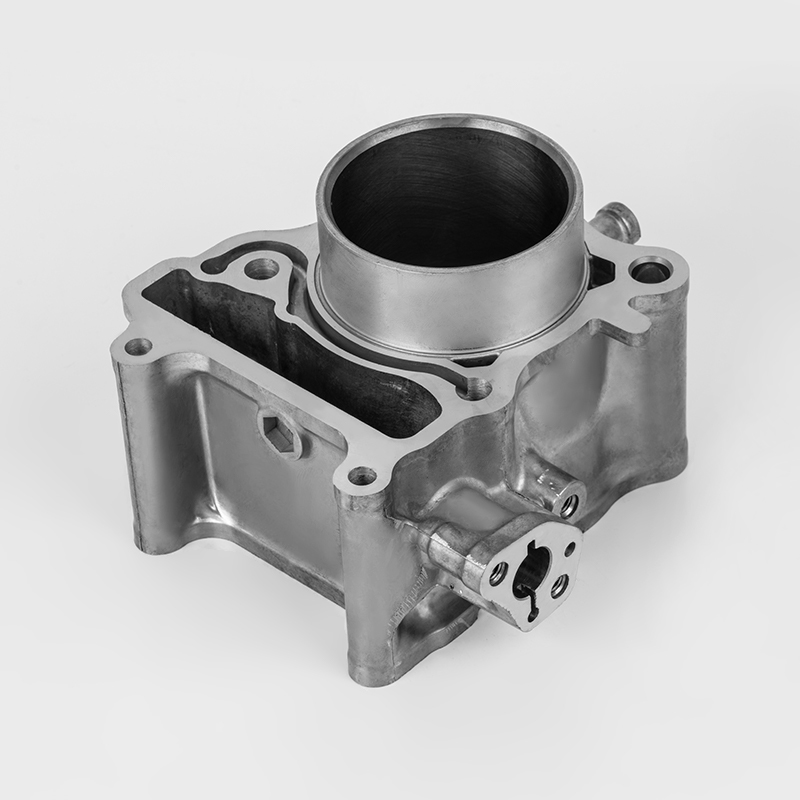
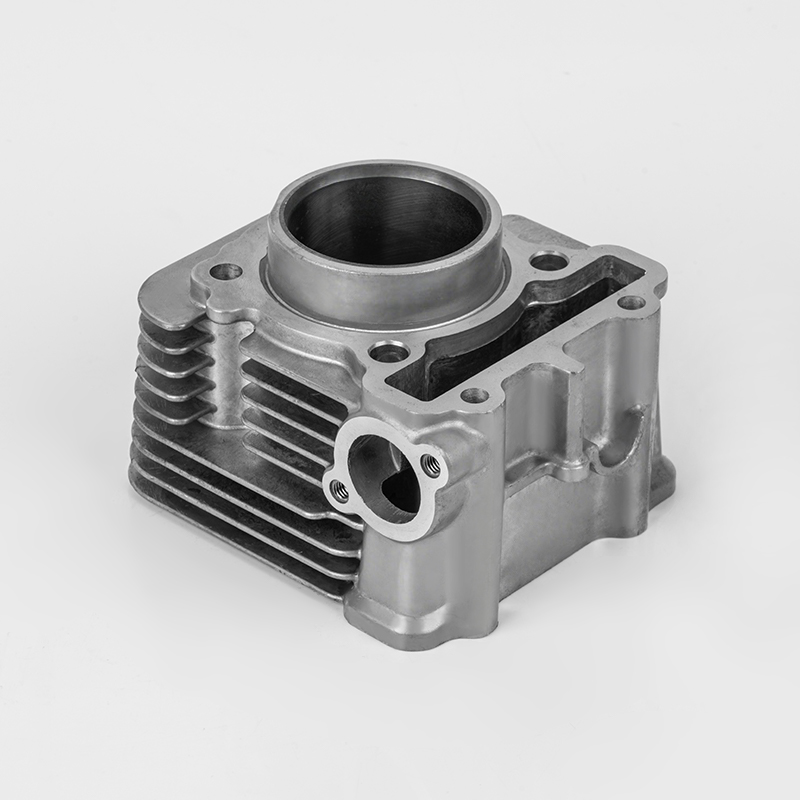
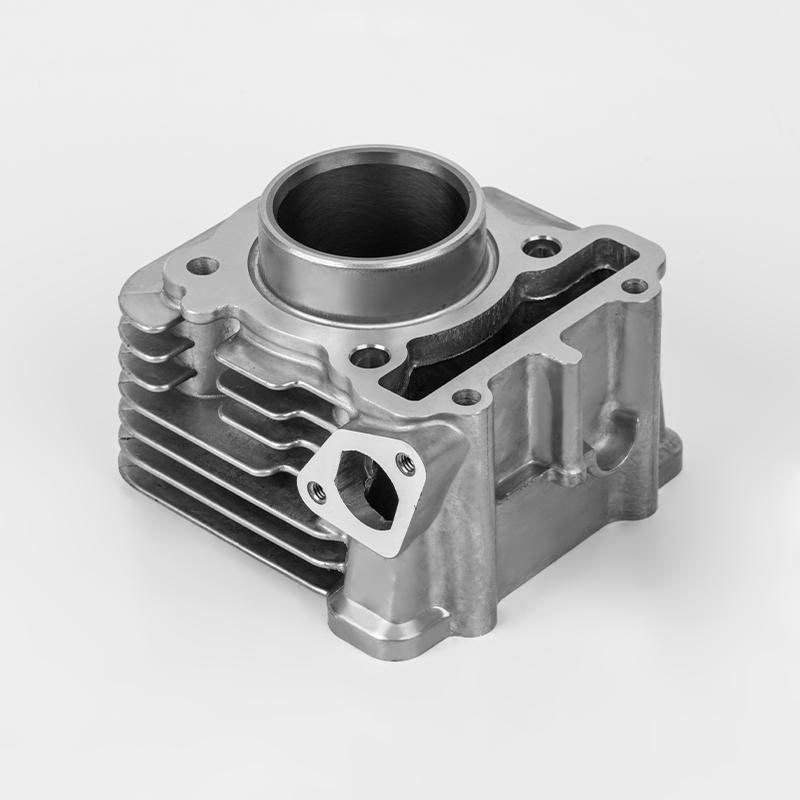
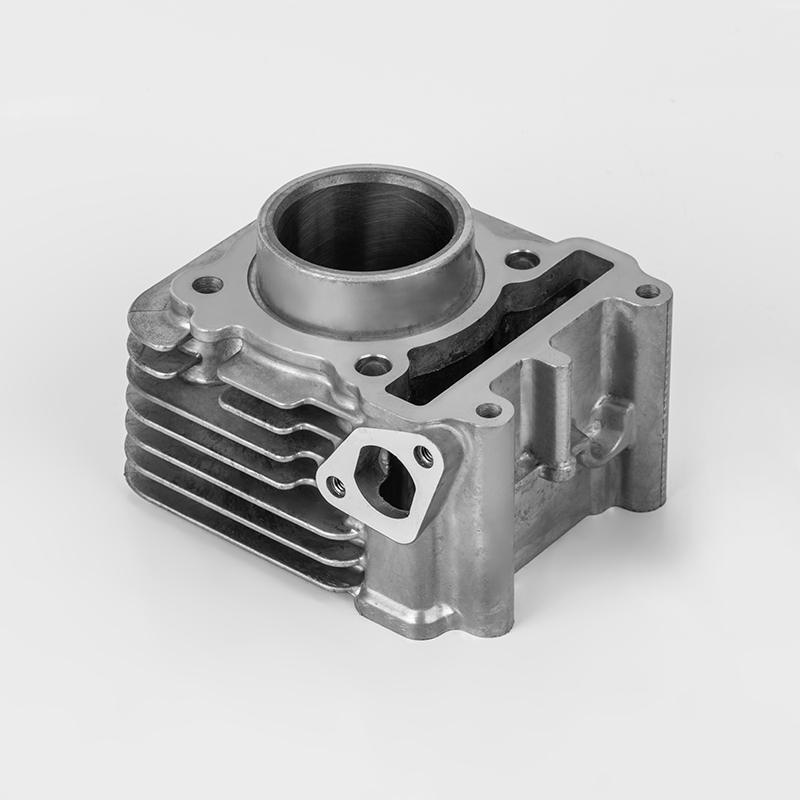
Order a replacement cylinder using only the engine size printed on the side cover and there is a real chance the part will not seat on the crankcase. What actually decides fitment is the displacement calculation behind that label: bore, stroke and cylinder count. Two engines both sold as 125 cc can run bores that differ by almost 5 mm, and 5 mm of bore is the difference between a bolt-on part and a shipment travelling back across the ocean.
Here is the conclusion first. Displacement is swept volume, meaning the space the piston travels through in one stroke, multiplied by the number of cylinders. For a single-cylinder four-stroke the arithmetic is 0.7854 x bore x bore x stroke, with bore and stroke in millimetres and the result in cubic centimetres. A 56.5 mm bore with a 49.5 mm stroke gives 124.1 cc, which the market rounds up and sells as a 125. A 57.4 mm bore with a 57.8 mm stroke gives 149.6 cc, which becomes a 150. Both are air-cooled singles with one piston, and neither cylinder block bolts onto the other engine.
The rest of this guide explains what displacement really measures, how a workshop verifies it, how big-bore work changes it, how it behaves across motorcycles, scooters, ATV and UTV machines, outboard engines, small diesels and compressors, and which measurements a buyer should confirm before an order is packed.
What Engine Displacement Actually Measures
Displacement counts only the volume swept by the piston between bottom dead centre and top dead centre. It deliberately ignores the clearance volume left above the piston at top dead centre, because that pocket does not move and therefore displaces nothing. The ratio between swept volume plus clearance volume and clearance volume on its own is the compression ratio, which is why a 124.6 cc single with a 12 cc chamber runs near 11.4 to 1 while the same cylinder with a 15 cc chamber runs near 9.3 to 1. Identical displacement, very different thermal and fuel behaviour.
For one cylinder, swept volume in cubic centimetres is 0.7854 x bore in millimetres x bore in millimetres x stroke in millimetres, then divided by 1000. For a twin, a triple or a four, multiply the single-cylinder figure by the cylinder count. Unit conversion humbles a lot of buyers: one cubic inch equals 16.387 cc, so a 61 cubic inch engine is 999 cc and a 103 cubic inch engine is 1688 cc. The two labels describe exactly the same physical quantity.
Rounding is the second source of confusion. Factories round displacement to a convenient class label, almost always upward. A 124.1 cc engine becomes 125, a 149.6 cc engine becomes 150, and an engine measuring 122.9 cc can still be listed as 125 in an aftermarket catalogue. The class label describes the showroom bracket the machine competes in. It does not describe the bore you need to order.
- Swept volume: the moving part of the cylinder, and the only volume counted as displacement.
- Clearance volume: the fixed pocket above the piston crown, counted only when calculating compression.
- Stroke: a crankshaft dimension, and no cylinder you buy can change it.
- Bore: the one variable the new cylinder block does set, along with effective height and stud pattern.
That last point drives most ordering mistakes. A cylinder block fixes the bore diameter, the height of that bore, the gasket face and the spacing of the mounting studs. It cannot change the stroke, because stroke belongs to the crank. So when a buyer asks for a 150 cylinder, the genuinely useful reply is a question: which bore, and which effective height, on which crank?
| Bore (mm) | Stroke (mm) | Swept volume (cc) | Class label | Typical application |
|---|---|---|---|---|
| 39.0 | 41.4 | 49.5 | 50 | Moped and entry scooter |
| 47.0 | 41.4 | 71.8 | 70 to 80 | Light two-wheeler |
| 50.0 | 55.6 | 109.2 | 110 | Commuter underbone |
| 52.4 | 57.8 | 124.7 | 125 | Scooter, GY6 pattern |
| 56.5 | 49.5 | 124.1 | 125 | Commuter motorcycle, CG pattern |
| 54.0 | 58.7 | 134.4 | 135 | Water-cooled sport single |
| 57.4 | 57.8 | 149.6 | 150 | Scooter and light motorcycle |
| 63.5 | 62.2 | 197.0 | 200 | Light motorcycle and ATV |
| 72.0 | 61.2 | 249.2 | 250 | Dual sport and utility single |
| 85.0 | 70.0 | 397.2 | 400 | ATV and utility engine |
Same Displacement, Different Engine: Why Bore and Stroke Split the Classes
Two engines can land within one cubic centimetre of each other and still behave like different machines. A 52.4 mm bore with a 57.8 mm stroke measures 124.7 cc. A 56.5 mm bore with a 49.5 mm stroke measures 124.1 cc. The first is undersquare, because the stroke is longer than the bore. The second is oversquare, because the bore is wider than the stroke. The undersquare engine fills its cylinder more completely at low rpm and makes its torque earlier. The oversquare engine has room for larger valves and revs higher before piston speed becomes the limiting factor.
For the person buying a cylinder block, this matters in a very practical way. The class label is shared, but the hardware is not. The bore diameter is different, the cylinder height is different, the gasket face is different and the piston that fits one will not fit the other. A 124.7 cc build needs a bore machined to 52.4 mm with the correct effective height for its own crank, and a 124.1 cc build needs 56.5 mm with its own height. Mixing them produces either a piston that slaps in an oversized bore or a block that never reaches the correct deck height, and both end in a stripped stud or a blown gasket within a few hundred kilometres.
Cooling layout adds a second divider inside the same class. A 135 class single bored to 54.0 mm with a 58.7 mm stroke runs a water jacket, because the thermal load per square centimetre of cylinder wall is high enough that fins alone struggle in traffic. Its air-cooled cousins in the 125 class run taller fins and a wider bore-to-finning ratio instead. Both approaches exist in our own catalogue, and the part numbers carry the bore so the two never get confused on the shelf.
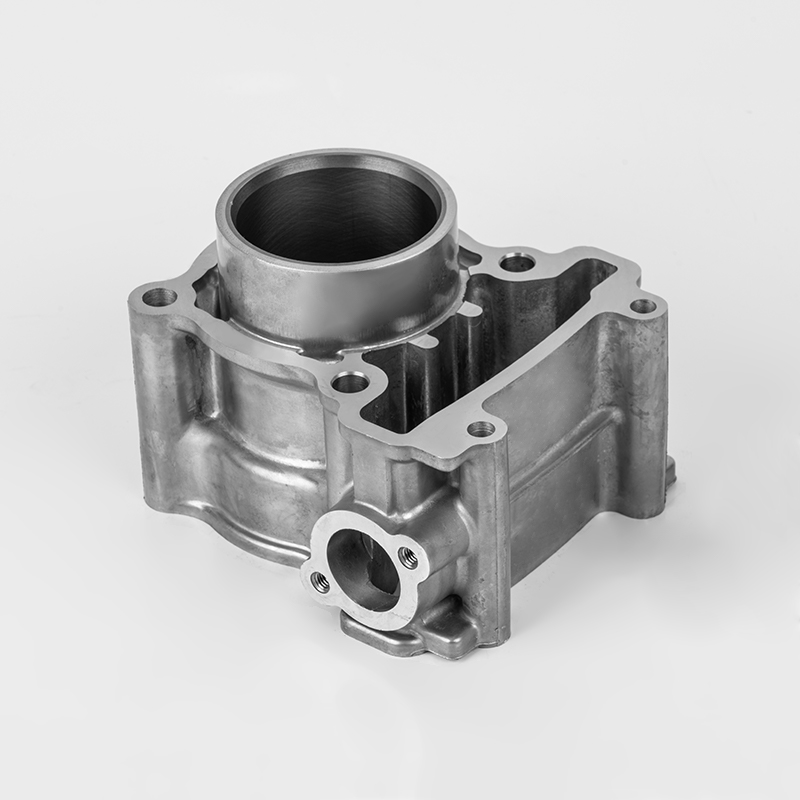
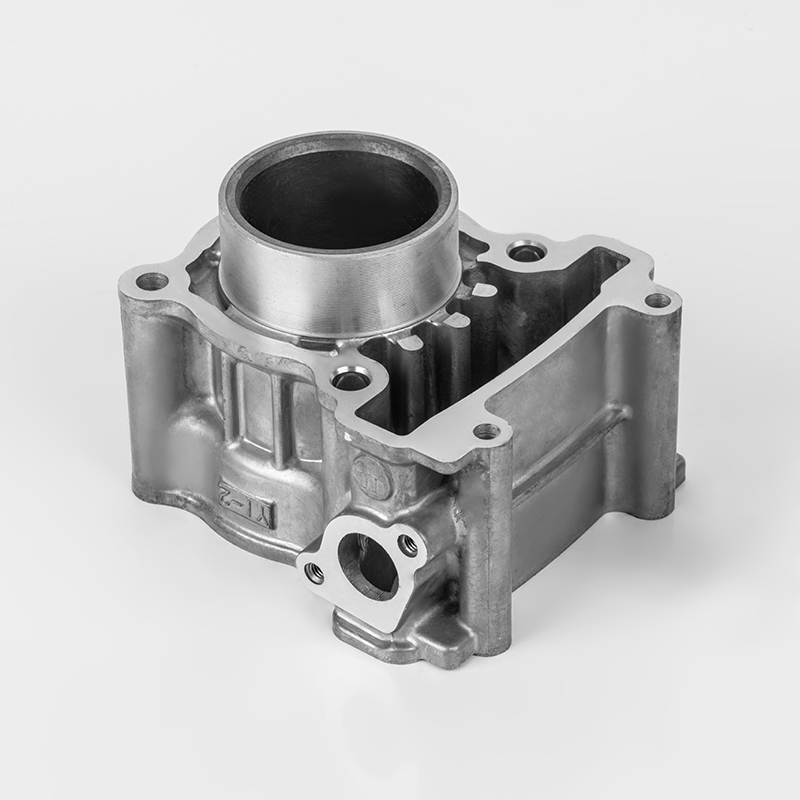 LC135 (Φ54/57) Yamaha water-cooled aluminum engine cylinder1. Applicable models: Yamaha LC135, VIXION R115, and other popular models in the Southeast Asian market, compatible with some modification kits for competition scenes ...View Product →
How Bore Numbers Hide Inside Cylinder Part Names
One of the most useful habits in this trade is to read the digits after the model code. In aftermarket catalogues the bore is often printed directly in the part name, because the model code alone is ambiguous. A CG125 pattern cylinder listed as 56.5 is machined to a 56.5 mm bore. A GN125 pattern listed as 57 is machined to 57 mm. A GY6 pattern listed as 52.4 is 52.4 mm, while a 150 version of the same family is 57.4 mm. The same convention runs through diesel and compressor lines: the F170 pattern is a 70 mm bore, the F175 pattern is 75 mm, and compressor cylinders such as BW125-65, BX100-78, BW200-90 and DFH100-38 carry 65, 78, 90 and 38 mm bores respectively.
Once a buyer understands that the trailing number is a bore and not a horsepower rating, cross-referencing becomes mechanical rather than guesswork. Match the bore, then confirm the stroke from the crank or the workshop manual, then confirm the effective height against the old cylinder. Anyone new to this workflow will find a structured walkthrough in our buyer knowledge guide to motorcycle cylinder selection, which covers the same matching logic from the shop floor side.
A quick warning about listings that show only a class label. A cylinder advertised simply as 150 could be 57.0 mm, 57.4 mm, 57.8 mm, 62.0 mm or 63.5 mm depending on the family it belongs to. The difference between 57.4 mm and 62.0 mm is 4.6 mm of bore, which is roughly 16 percent more swept volume on the same crank, and on an air-cooled block it is also the difference between a comfortable liner wall and a wall that cracks under heat cycling.
Big-Bore Work: What the Arithmetic Allows and What the Metal Allows
Displacement rises with the square of the bore, so a modest cut at the boring bar produces a disproportionate jump in swept volume. Start with a 57.0 mm bore on a 48.8 mm stroke and the engine measures 124.6 cc. Take the bore to 59.0 mm and the same crank now drives 133.4 cc, a gain of 7.1 percent from 2 mm of material. On the 150 class, a 57.4 mm bore with a 57.8 mm stroke measures 149.6 cc, and opening it to 61.4 mm produces 171.2 cc, a gain of 14.4 percent.
The compression ratio moves at the same time, and most riders do not plan for it. If clearance volume stays at 12 cc, the first example climbs from roughly 11.4 to 1 at 124.6 cc to roughly 12.1 to 1 at 133.4 cc. Nothing was changed in the chamber, the piston or the gasket, yet the engine now needs higher octane fuel and pulls more timing out of the combustion window. That is the moment a project starts needing jetting work, a cam with different overlap, and a cooling system review.
- Liner wall: on an air-cooled single, cast iron liners are usually kept at a minimum of about 3 mm at the thinnest point. Below that, the bore distorts when hot and ring seal collapses.
- Plated bores: a plated aluminium cylinder cannot simply be bored out. The coating must be stripped and renewed, because a thinner coating at the top of the bore wears through and takes the piston with it.
- Crankcase spigot: the opening in the upper crankcase sets a hard ceiling on bore diameter. Machining the case is possible, but it is engine-out work and it changes the gasket surface.
- Head and gasket: a wider bore needs a matching combustion chamber and gasket bore. Reusing a gasket sized for 57 mm on a 61 mm cylinder leaves a ledge that glows under load.
- Fuel and air: a 14 percent displacement increase with an untouched carburettor runs lean at wide throttle. Main jet adjustments of two to four sizes are common on small singles.
Practical judgement: an increase of 5 to 8 percent is usually a bolt-on project with jetting. Anything beyond 12 percent in an air-cooled single belongs to a planned build with a bigger head, a stronger clutch and a cooling review, not a weekend experiment.
Displacement Ranges Across Motorcycles, ATV, Outboard, Diesel and Compressor Engines
Displacement per cylinder is the number that decides how a cylinder block is designed, because it sets the bore, the wall thickness, the cooling strategy and the material. The same physical displacement is handled very differently depending on the machine it sits in. A 125 cc scooter cylinder shifts less heat than a 400 cc utility ATV cylinder, but it lives in tighter packaging and runs at higher rpm for longer. The table below maps the ranges we see in real orders.
| Machine type | Displacement per cylinder | Typical bore range | Material pattern | Deciding factor |
|---|---|---|---|---|
| Commuter motorcycle and underbone | 100 to 150 cc | 47 to 57 mm | Aluminium die casting with iron liner, or cast iron | Wear life against unit cost |
| Scooter, air and water cooled | 50 to 250 cc | 39 to 72 mm | Aluminium die casting | Liner quality and bore finish |
| Sport and performance single | 135 to 400 cc | 54 to 85 mm | Aluminium with plated or lined bore | Heat management at sustained rpm |
| ATV and utility vehicle | 250 to 1000 cc | 72 to 102 mm | Cast iron and aluminium | Strength under load and dusty conditions |
| Outboard engine | 5 to 200 hp classes | 50 to 90 mm | High silicon aluminium | Corrosion resistance and heat dissipation |
| Single cylinder diesel | F170 and F175 patterns | 70 to 75 mm | Aluminium and cast iron | Wear resistance at constant load |
| Air compressor | 38 to 105 mm bore sizes | 38 to 105 mm | Cast iron in most cases | Bore fit accuracy and long service intervals |
The outboard column shows how far a single cylinder family can stretch. In the same product line, small engines use bores in the 50 mm region while a 200 hp class cylinder reaches 90 mm, and the material shifts from a conventional aluminium casting to a high silicon aluminium alloy that resists salt water pitting while still transferring heat away from the bore. That is not a marketing detail. It is the difference between a cylinder that survives five seasons in coastal service and one that corrodes from the water jacket outward in eighteen months.
 Y200(Φ90)Outboard cylinder series with good heat dissipation1. Aluminum fin heat sink: integrated spiral water channel and dense heat sink, heat sink thickness ≤1.5mm, spacing ≤3mm, effectively increase the contact area with co...View Product →
Why a 400 cc Cylinder Is Not Simply a Scaled-Up 50 cc Cylinder
Displacement per cylinder sets the heat load that the cylinder wall has to carry away. A 50 cc scooter cylinder shares its external cooling area with an engine making a few kilowatts. A 400 cc air-cooled single makes several times that power from a comparable outside surface, and the fins cannot grow in proportion because the engine still has to fit inside a frame. Material choice is the answer to that squeeze, and it is why the catalogue splits into distinct families rather than one universal cylinder.
Aluminium with a cast iron liner is the workhorse approach for commuter motorcycles up to about 150 cc. It machines well, it can be rebored, and it keeps cost predictable for high volume repair markets. The liner carries the wear, the aluminium carries the heat. Plated aluminium removes the liner and plates the bore directly with a hard nickel silicon carbide type coating, which improves heat transfer and allows tighter bore control, but it cannot be rebored and must be re-plated when worn. High silicon aluminium takes the same idea further for marine work, using the silicon content in the alloy itself as the wear surface. Cast iron remains the choice where wear resistance and dimensional stability matter more than weight, which is why single cylinder diesels and compressor cylinders still rely on it heavily.
Our own manufacturing base has been machining these castings since 1992, with more than 300 specifications across the aluminium motorcycle cylinder series, cast iron series, ATV and UTV range, outboard range, diesel range and compressor range. The variation across that list exists because displacement, cooling method and duty cycle pull the design in different directions, not because one bore size was repeated with new part numbers.
What to Verify Before Ordering a Replacement Cylinder
Displacement gets you into the correct family. The measurements below get you the correct part. A workshop that works through them in order rarely ships a cylinder back.
- Measure the old bore with a bore gauge at three heights and two axes, so taper and out of round appear in the numbers. Nominal bore is not enough, because a worn 56.5 mm cylinder can measure 56.6 mm at the top.
- Confirm the stroke from the crankshaft or the service manual. Never infer stroke from the class label, since a 125 label covers strokes from 48.8 mm to 57.8 mm.
- Compare effective height, the distance from the base gasket face to the top deck, against the original. A 0.5 mm error changes deck height and therefore compression.
- Check the gasket face width and stud spacing. A wider bore with the same stud pattern leaves less sealing land, which is where head gasket failures start.
- Match the cooling arrangement. Air-cooled fins and water jackets are not interchangeable, and the jacket volume affects how much coolant the system needs.
- Confirm the piston-to-cylinder clearance target for the piston you will actually fit. Small air-cooled singles commonly fall in the 0.03 to 0.06 mm band with cast pistons, while forged pistons in plated bores usually need more, in the region of 0.05 to 0.08 mm.
- If this is a big-bore project, measure the crankcase spigot diameter before ordering. It sets the maximum bore the case will accept.
- On receipt, inspect bore finish, chamfers at the ports and coating uniformity before assembly, and record the measurements on the job sheet.
Wear limits are worth stating plainly, because they decide whether a cylinder can be reused. Workshop practice on small air-cooled singles typically retires a cylinder once taper or out of round passes about 0.05 mm, with factory service limits quoted anywhere between 0.05 and 0.10 mm depending on the model and the material. A rebore and hone to the next oversize piston is the cheaper route while wall thickness allows. Once the liner wall drops below roughly 3 mm, replacement of the block is the safer decision.
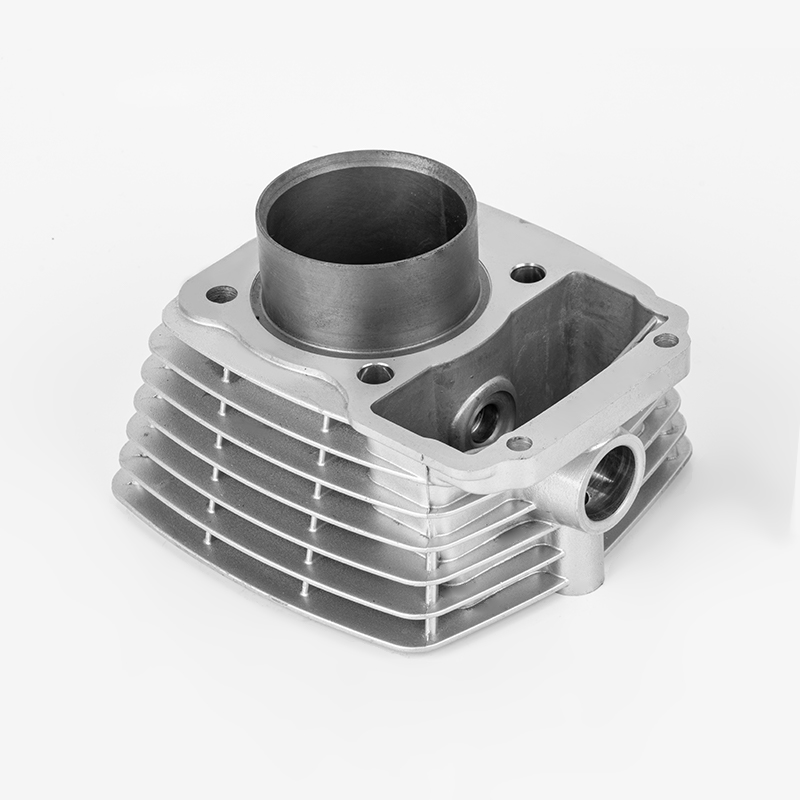 CG125 (Φ56.5) Honda die casting engine cylinder assembly1. Product Overview: The CG125 (Φ56.5) series is the core power component of Honda's classic CG platform, suitable for a 125cc single-cylinder four-stroke engine, usin...View Product →
Frequently Asked Questions About Motorcycle Engine Displacement
Is engine displacement the same thing as cc?
Yes. cc stands for cubic centimetres, which is the unit of swept volume. When a catalogue says 150 cc, it means the piston sweeps 150 cubic centimetres of volume per cycle across all cylinders. In older catalogues the same measurement appears in cubic inches, where one cubic inch equals 16.387 cc.
Can I fit a 150 cc cylinder to a 125 cc engine?
Only when the bore, effective height and crankcase spigot line up with your build. The class label is irrelevant to fitment. Moving a 57.4 mm bore to 61.4 mm on the same 57.8 mm stroke takes displacement from 149.6 cc to 171.2 cc, which is a 14.4 percent increase and usually requires a matching piston, a chamber check, jetting changes and a cooling review.
How much displacement does a 2 mm big-bore add?
Because volume rises with the square of the bore, a 2 mm increase on a 57.0 mm bore adds about 7 percent. On a 48.8 mm stroke, that takes 124.6 cc to 133.4 cc. The same 2 mm on a smaller 52.4 mm bore adds proportionally more, since the starting point is smaller.
Does a stroker crank change displacement?
Yes, and it changes it linearly rather than by the square. A 57.4 mm bore with a 57.8 mm stroke measures 149.6 cc. Increasing the stroke to 61.8 mm with the same bore produces 159.9 cc, about 6.9 percent more, and the cylinder block may need a taller effective height or a spacer plate to keep the piston at the right deck height.
Why does my 125 cc engine have a 56.5 mm bore rather than something that adds up exactly?
Because class labels are rounded. A 56.5 mm bore with a 49.5 mm stroke measures 124.1 cc, and a 52.4 mm bore with a 57.8 mm stroke measures 124.7 cc. Both are marketed as 125. The label is a bracket, not a specification.
Does a bigger displacement cylinder always run hotter?
Not automatically, but heat flux per unit of cooling area rises quickly. Going from 124.6 cc to 133.4 cc on the same fins increases the amount of energy each square centimetre of cylinder wall must pass to the air by roughly 7 percent at the same power level, which is why big-bore air-cooled builds often need richer fuelling and attention to airflow over the barrel.
What should be measured on a new cylinder before installation?
Bore diameter at three heights and two axes, effective height from base face to top deck, gasket face flatness, chamfer quality at the ports, and coating or liner uniformity. Recording those numbers on the job sheet turns a warranty conversation into a measurement comparison instead of an argument.
How does the calculation work on a multi-cylinder engine?
Calculate the swept volume of one cylinder and multiply by the cylinder count. A 250 cc twin therefore runs roughly 125 cc per cylinder, which is why it can use a bore and stroke combination that looks like a single-cylinder 125 design, even though the block, the head and the crank are completely different parts.
The Four Numbers That Decide Everything
Displacement is a consequence, not a specification. It falls out of four numbers: bore, stroke, cylinder count and, in practice, the effective height that keeps the piston at the right deck position. Keep those four in front of you and the class label stops being a source of confusion. A 124.1 cc engine and a 124.7 cc engine share a showroom bracket and share nothing on the workbench.
For buyers working through a parts list, the sequence is simple. Work out the swept volume to identify the family, confirm the bore that family actually uses, confirm the stroke from the crank, then confirm the height, the gasket face and the material. Do that, and a replacement cylinder arrives as a part that fits rather than a part that nearly fits.