
 English
 Español
 عربى


Content
- 1 Why the 125 cc Label Describes Displacement, Not Size
- 2 Air-Cooled Versus Liquid-Cooled 125 cc Cylinders: A Tolerance Difference, Not a Shape Difference
- 3 Three 125 cc Platforms That Absorb Most of the World's Replacement Demand
- 4 Bore, Stroke and Compression Height: The Three Numbers That Decide Fit
- 5 Aluminum or Cast Iron: Pick Based on the Duty Cycle, Not the Price Tag
- 6 The Tolerances Worth Writing Into a Purchase Order
- 7 How 125 cc Cylinders Actually Fail
- 8 Ordering Checklist for Importers, Distributors and Repair Shops
- 9 Frequently Asked Questions About 125 cc Cylinders
- 9.1 What bore size should I order for a 125 cc replacement cylinder?
- 9.2 Is an aluminum cylinder less durable than a cast iron one?
- 9.3 What piston clearance should a workshop use?
- 9.4 Do I need to replace the cylinder or only the piston rings?
- 9.5 Why does a rebuilt 125 cc engine burn oil after a new top end?
- 9.6 How long should break-in take after fitting a new cylinder?
- 9.7 Can one cylinder part number cover several 125 cc models?
- 9.8 What should I check on a delivered batch of cylinders?
- 9.9 Should a repair shop stock complete kits or bare cylinders?
- 10 The Bottom Line on Buying 125 cc Cylinders
A 125 cc single-cylinder engine is the most heavily produced internal combustion engine on the planet, which also makes it the most frequently torn down, measured and rebuilt. If you run a repair shop, wholesale parts across borders, or assemble complete machines, the cylinder block you buy decides whether that engine runs clean for a year or comes back to your counter in three months with a complaint about oil burning.
Here is the short answer before the detail. Before you order a 125 cc cylinder, lock down three dimensions: bore, stroke and compression height. Then make one material decision: an aluminum body with a cast iron liner when heat transfer and weight matter most, or a heavy cast iron cylinder when the duty cycle is brutal and fuel quality is inconsistent. Finally, put bore tolerance, roundness and honing cross-hatch angle in writing on the purchase order. Those three steps eliminate the vast majority of fitting disputes, warranty claims and returned pallets.
Why the 125 cc Label Describes Displacement, Not Size
The number on the side cover tells you swept volume, nothing else. Displacement comes from a simple formula: bore squared multiplied by stroke multiplied by 0.7854, times the number of cylinders. A single-cylinder 125 has one set of numbers to satisfy, and there is a wide range of bore and stroke combinations that all land between 123 and 125 cc.
This matters commercially. Two engines that both read "125 cc" on the badge can have cylinder bores separated by more than 5 mm, completely different deck heights, different stud spacing and different water jacket shapes if one is liquid cooled. A cylinder that fits a 52.4 mm long-stroke scooter engine will not go anywhere near a 56.5 mm short-stroke commuter engine. The displacement label is a marketing and tax classification; the bore and stroke are the engineering reality.
There is also a thermal consequence. A 125 cc engine pushing roughly 8 to 11 horsepower at 7,500 to 8,500 rpm is deliberately under-stressed, which is exactly why these engines last so long when the top end is built correctly. Short-stroke versions with wider bores run higher piston speeds but shed heat more efficiently through a wider, flatter combustion chamber. Long-stroke versions produce better torque at low rpm and are far more forgiving of poor fuel, but the narrower bore concentrates heat in a smaller area and punishes a marginal cooling system.
Air-Cooled Versus Liquid-Cooled 125 cc Cylinders: A Tolerance Difference, Not a Shape Difference
Buyers often assume that an air-cooled and a liquid-cooled 125 cc cylinder of the same bore are interchangeable in build standard. They are not. The cooling method changes how much the bore moves when the engine reaches operating temperature, and the piston clearance has to be set around that movement.
Air-cooled cylinders
- Run wider piston-to-bore clearance, typically around 0.04 to 0.05 mm for an aluminum piston in a cast iron liner at 56.5 mm bore.
- See larger thermal swings between cold start and highway running, so cylinder distortion during warm-up is a real factor.
- Depend on fin area and airflow. A clogged or bent fin set is a genuine cause of seizure, not a cosmetic problem.
- Tolerate slightly rougher honing without losing oil control, which is helpful in markets where oil change intervals are stretched.
Liquid-cooled cylinders
- Use tighter clearances because the jacket keeps bore growth predictable, often 0.03 to 0.04 mm at the same bore size.
- Have thinner wall sections, so roundness and wall thickness consistency matter far more during manufacturing.
- Reveal a bad head gasket immediately as coolant loss or white exhaust, whereas an air-cooled unit may simply run hot for weeks before failing.
- Punish any corrosion in the water passages, which is why the jacket geometry and surface finish inside the casting deserve attention.
Practically, if you buy one part number for both applications, expect comeback rates to rise. Clearance, honing and sometimes ring tension all shift between the two.
Three 125 cc Platforms That Absorb Most of the World's Replacement Demand
Across Southeast Asia, South Asia, Africa, Latin America and the Middle East, replacement demand for 125 cc cylinders clusters around a handful of engine families that were copied, licensed or reverse-engineered for decades. Understanding which family you are dealing with is more useful than any generic compatibility chart.
The 56.5 mm short-stroke commuter family
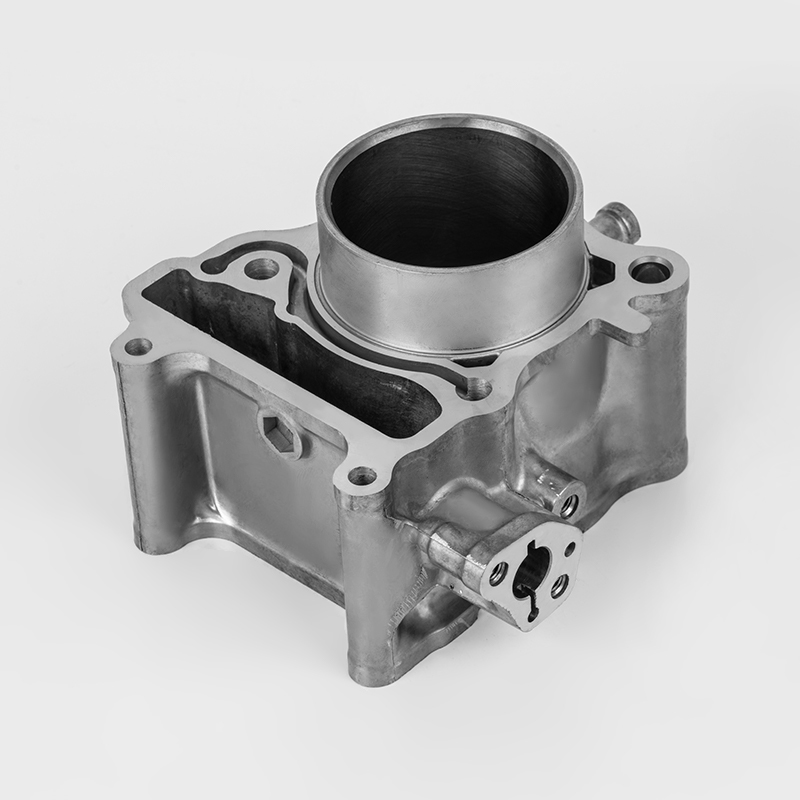
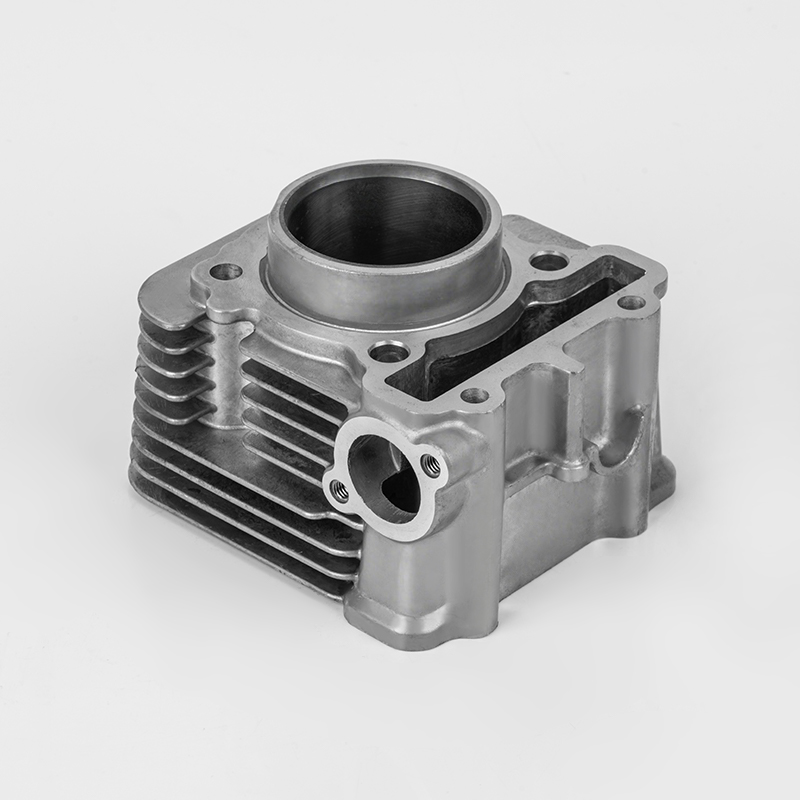
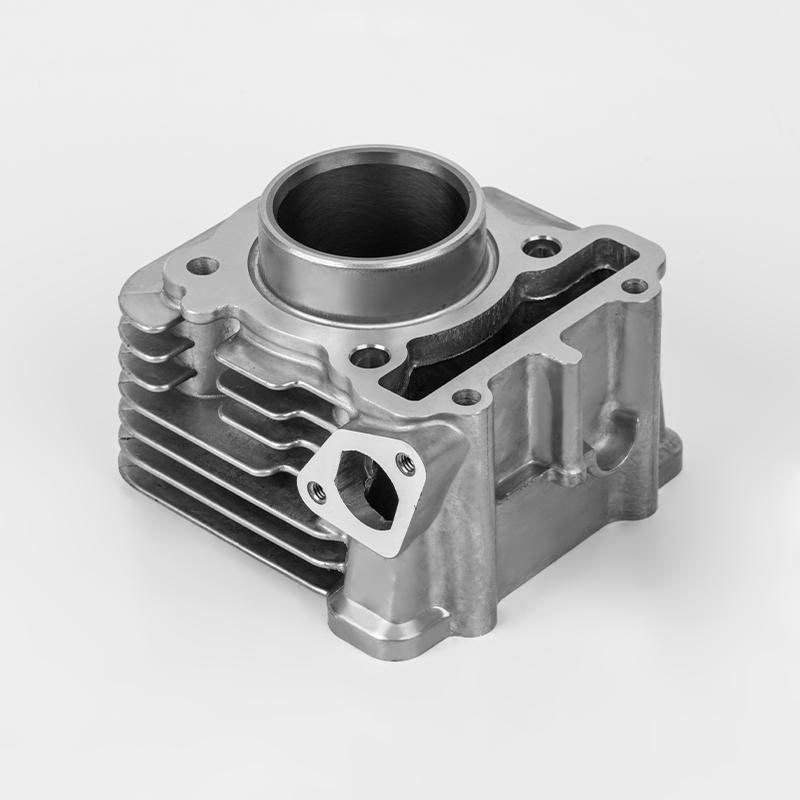
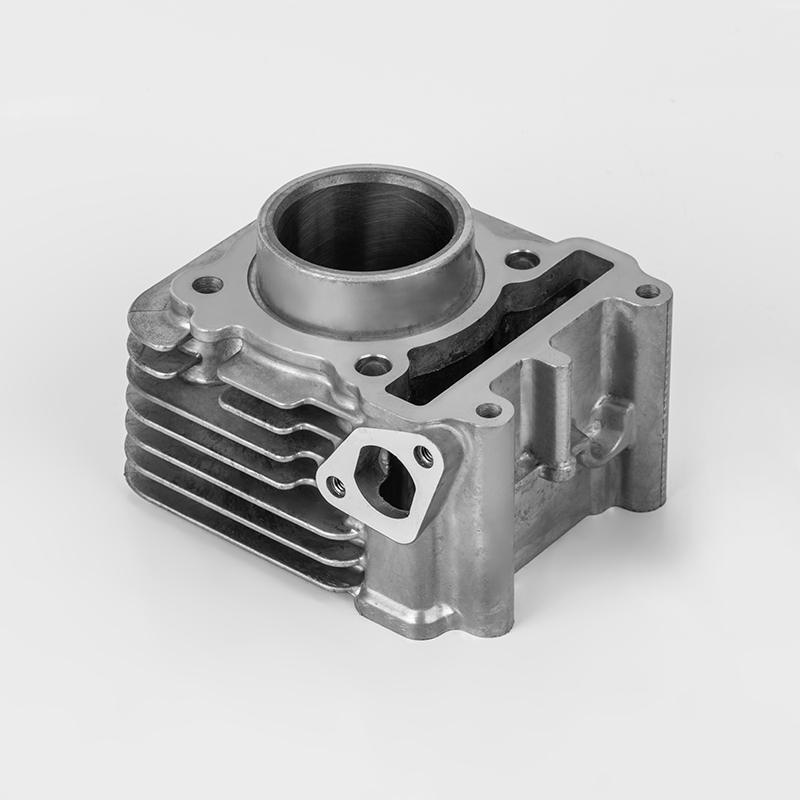
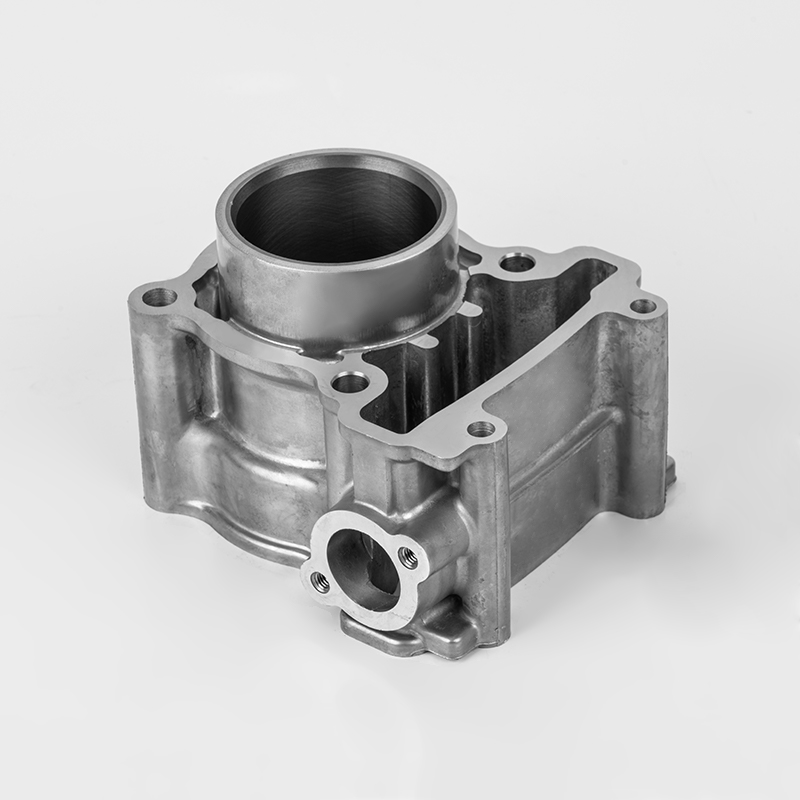
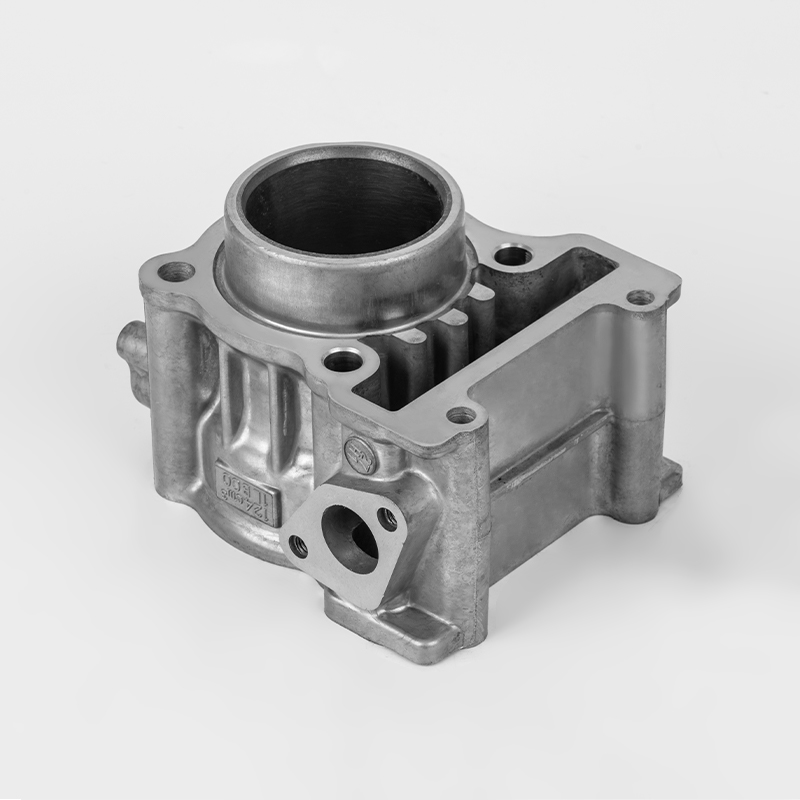
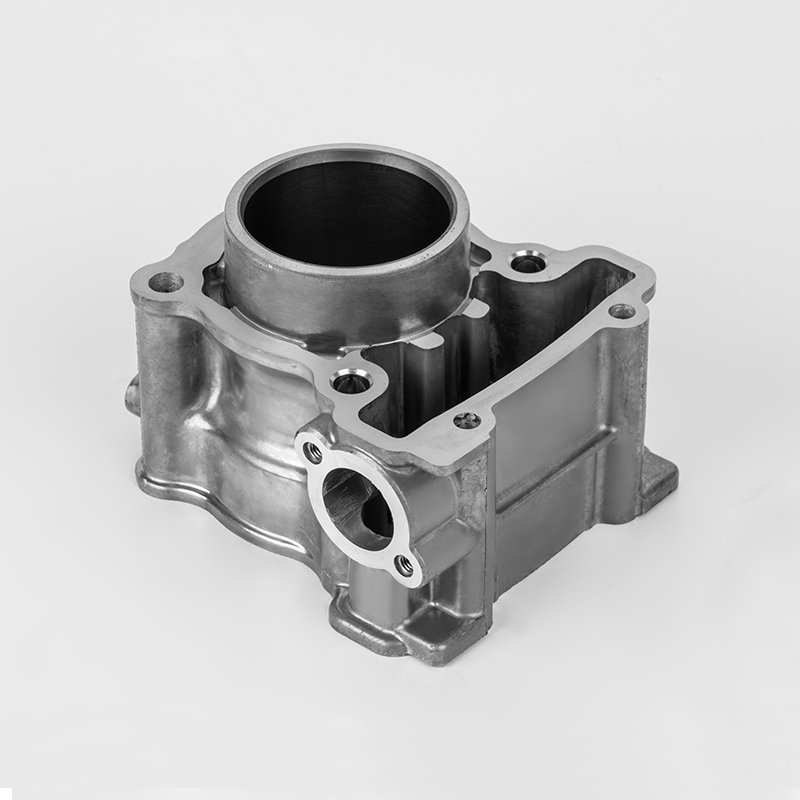
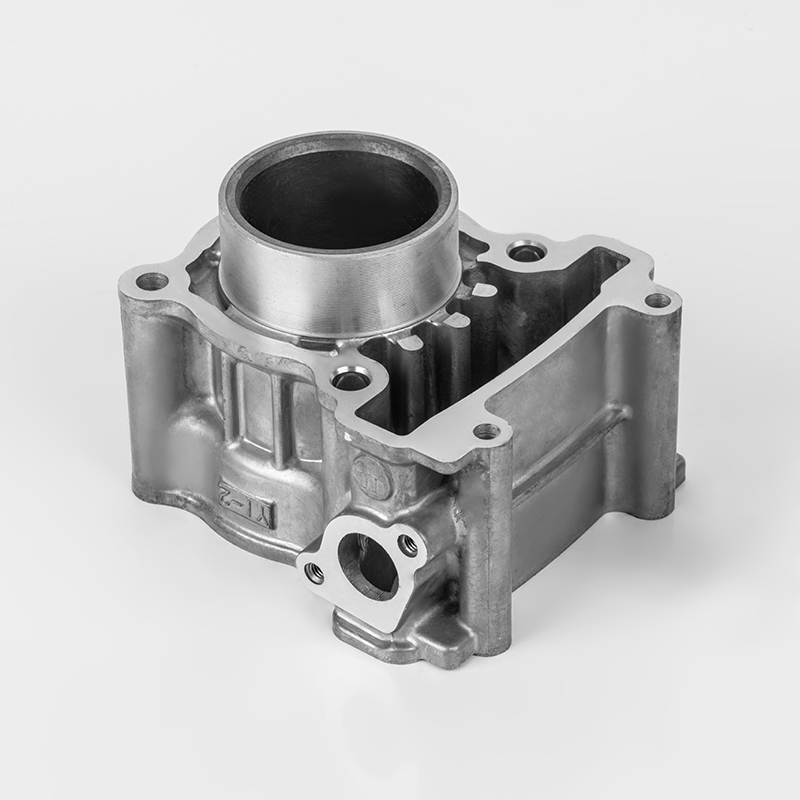
With a 56.5 mm bore and 49.5 mm stroke, this is the classic 124 cc pushrod commuter layout. It has been built in enormous numbers and cloned by dozens of assemblers. Because the geometry is so widely copied, an aluminum die-cast cylinder body with a cast iron liner in this size is one of the highest-turnover parts in the entire aftermarket. A typical replacement is a die-cast aluminum assembly with the liner already finished and honed.
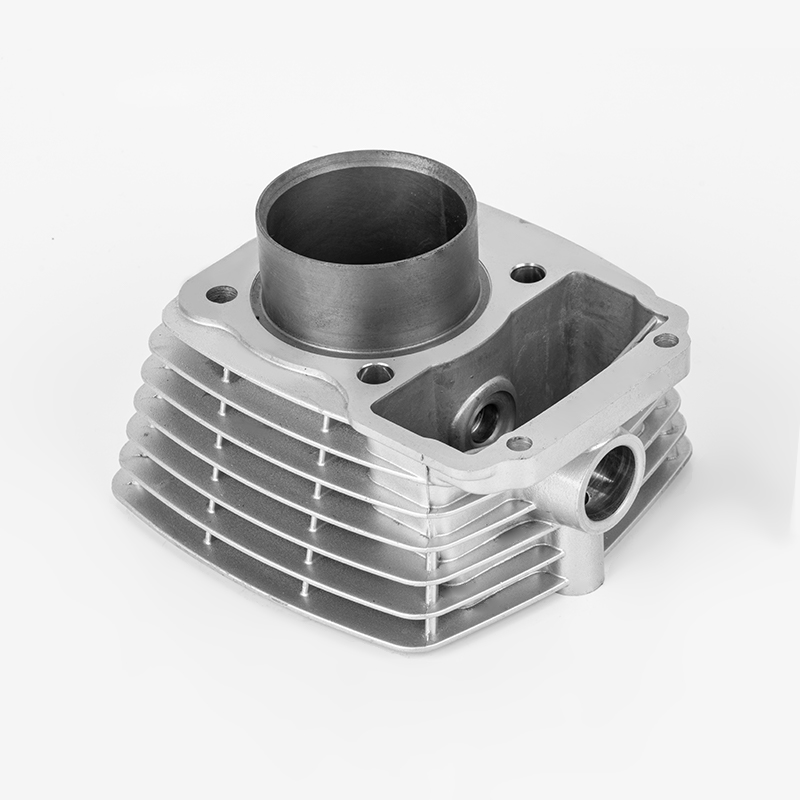 CG125 (Φ56.5) Honda die casting engine cylinder assembly1. Product Overview: The CG125 (Φ56.5) series is the core power component of Honda's classic CG platform, suitable for a 125cc single-cylinder four-stroke engine, usin...View Product →
The 54.0 mm square-stroke commuter family
A 54.0 mm bore with a 54.0 mm stroke produces 123.7 cc and a very balanced torque curve. These engines are popular for daily riders because they feel smoother than short-stroke alternatives and use less fuel when ridden gently. Replacement cylinders in this size need accurate deck heights because the compression ratio is often set higher, around 10:1, which leaves less margin for error if the piston sits too low or too high.
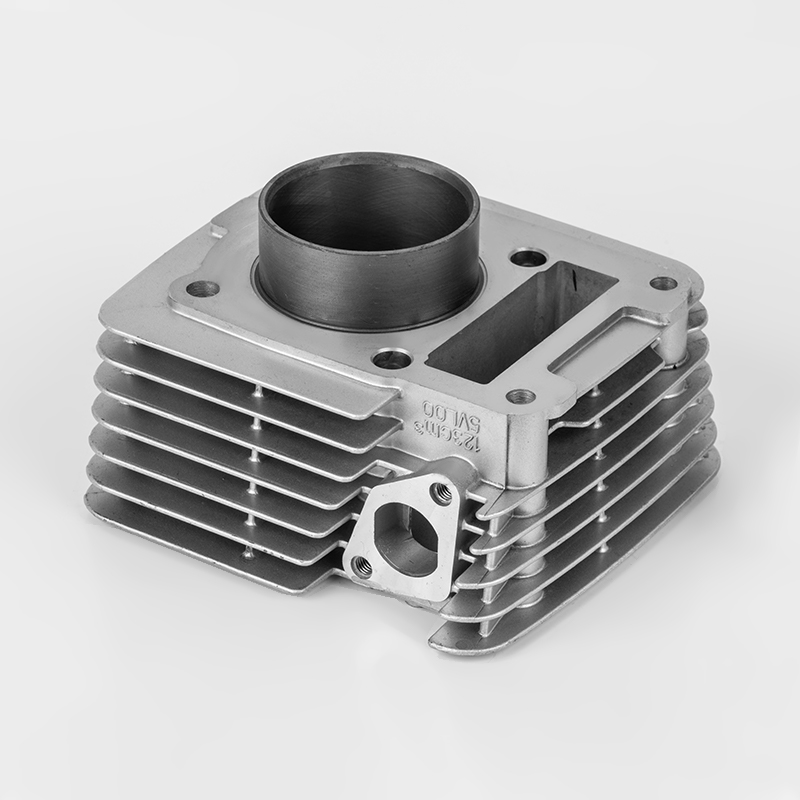 YBR125 (Φ54/57) Yamaha high-performance aluminum material1. Bore size: Φ54mm (standard version) or expanded to Φ57mm (performance modified version), suitable for high compression ratio (upgradeable to 11.6:1) 2. Lightweight ...View Product →
The 57.0 mm short-stroke commuter family
At 57.0 mm bore and 48.8 mm stroke, this layout delivers 124.5 cc with a strong low-end pull and a compact top end. It is common on lightweight street machines and small cruisers, and it is one of the most frequently rebuilt engines in markets where a bike is expected to serve as primary transport for a decade or more. A properly finished replacement body with a black coated liner is what most distributors stock.
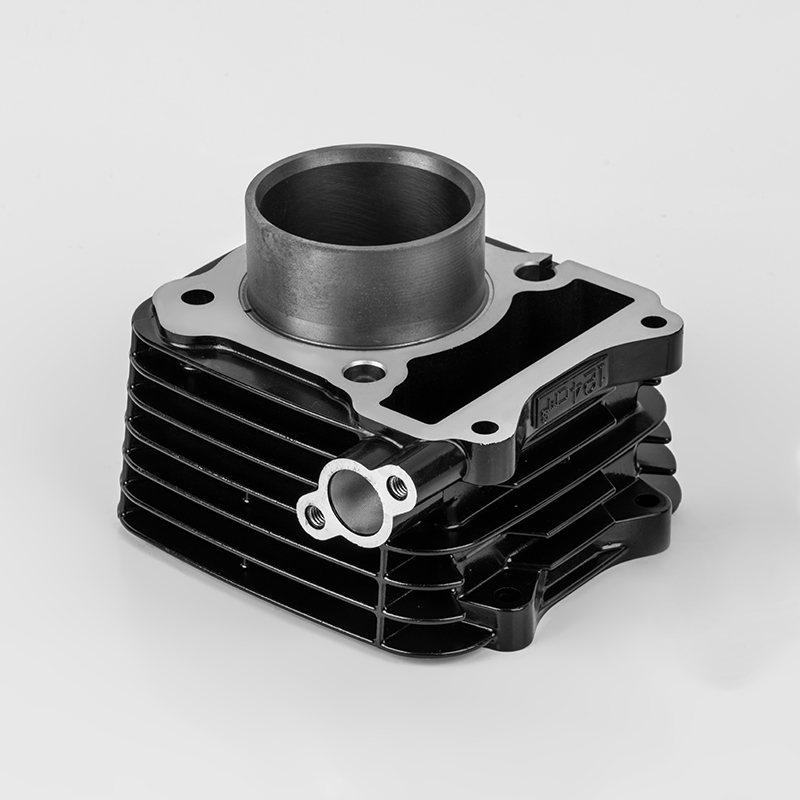 GN125 (Φ57) black motorcycle single cylinder Suzuki engine cylinder1. Bore: Φ57mm, consistent with the original engine bore of Suzuki GN125 (bore × stroke is 57mm × 48.8mm) 2. Material: A composite material of aluminum alloy and boron...View Product →
If you are new to sourcing this category, a structured overview of how cylinders are graded and specified on the supplier side is worth reading before you build a stock list.
Motorcycle cylinder buyer's knowledge covers the classification logic that sits behind most catalogues.
Bore, Stroke and Compression Height: The Three Numbers That Decide Fit
Distributors lose more money on compression height mistakes than on material quality. Bore and stroke are easy to check with a caliper and a spec sheet. Compression height is the one that quietly ruins an engine build: if the piston crown ends up below the cylinder deck, compression drops and the engine feels flat; if it sits proud, the piston kisses the head at high rpm.
Compression height is the distance from the centre of the piston pin bore to the top of the piston crown. Change the cylinder deck height by even 0.3 mm without adjusting anything else, and you shift compression ratio and squish band behaviour. This is why a "125 cc cylinder" listing that gives only bore and stroke is incomplete, and why serious buyers always request a dimensioned drawing before committing to volume.
| Bore x Stroke (mm) | Displacement (cc) | Cooling | Typical Application |
|---|---|---|---|
| 52.4 x 57.8 | 124.6 | Forced air | Scooters and city commuters |
| 54.0 x 54.0 | 123.7 | Air | Daily commuter street bikes |
| 56.5 x 49.5 | 124.1 | Air | High-volume commuter and utility bikes |
| 57.0 x 48.8 | 124.5 | Air | Lightweight street and cruiser style bikes |
Note the spread. A 56.5 mm bore and a 57.0 mm bore differ by half a millimetre, which is within the reach of a worn engine that has been over-bored. This is precisely why distributors who stock both must label them clearly and never rely on visual similarity alone.
Aluminum or Cast Iron: Pick Based on the Duty Cycle, Not the Price Tag
Both materials work. They fail differently, they sell differently and they suit different customers. Here is how to choose without guessing.
Choose aluminum when
- Weight reduction matters, which is nearly always the case on a small commuter.
- The engine is expected to warm up quickly and run at consistent temperature, so heat transfer through the liner and body is valuable.
- The bike is used for short urban trips with frequent cold starts, where a lighter top end reduces load on the whole engine.
- You are supplying a price-competitive aftermarket where a finished, ready-to-bolt-on assembly sells best.
Most aluminum 125 cc cylinder bodies in this class are die castings with a centrifugally cast iron liner, or in some designs a plated bore. The cast iron liner is the wear surface; the aluminum handles stiffness and heat. What matters at purchase is liner wall thickness consistency and how squarely the liner is seated in the casting. A liner that is 0.2 mm off-centre will machine to an uneven wall and distort once hot.
Choose cast iron when
- The engine works hard: loaded cargo bikes, steep terrain, high ambient temperatures, or continuous operation.
- Oil quality and oil change discipline are unreliable, so a material with high graphite content and natural scuff resistance is safer.
- The customer wants maximum rebuild life and is willing to accept extra weight.
- The cylinder may be re-bored later, which a thick-wall casting accommodates far better than a thin aluminum body.
Cast iron dampens vibration, holds its shape when hot and costs less to machine. The trade-off is roughly two to three times the weight of an equivalent aluminum body and slower warm-up, which increases bore wear during the first few minutes of every cold start.
A practical stocking rule for a distributor: carry aluminum for volume and price-sensitive replacement, and carry a smaller cast iron line for fleet, cargo and agricultural customers. Very few buyers regret having both; many regret having only one.
The Tolerances Worth Writing Into a Purchase Order
Vague orders produce variable parts. If your supplier is working to a drawing and a tolerance table, the conversation becomes objective. Use the values below as a starting reference for a 56.5 mm bore air-cooled 125 cc cylinder, then confirm against the specific engine manufacturer's service data, which always overrides generic figures.
| Control Point | Reference Range | Effect If Out of Range |
|---|---|---|
| Bore diameter | 56.50 mm plus or minus 0.01 | Piston slap, oil consumption, or seizure |
| Cylindricity | Within 0.01 mm | Uneven ring sealing and blow-by |
| Surface roughness Ra | 0.4 to 0.8 micrometres | Poor oil retention or slow ring seating |
| Honing cross-hatch angle | 40 to 60 degrees | Oil carry-over or dry running |
| Piston clearance | 0.03 to 0.05 mm | Noise on one side, scuffing on the other |
| Deck flatness | Within 0.03 mm | Head gasket leakage and compression loss |
| Liner wall thickness variation | Within 0.15 mm around the bore | Uneven heat distribution and bore distortion |
A supplier that can quote these numbers back to you, and attach an inspection report per batch, is a different class of supplier from one that only sends a photograph. Asking for a dimensioned drawing and a sample batch measurement costs nothing and filters out most of the risk.
How 125 cc Cylinders Actually Fail
Failure patterns tell you what to inspect and what to warn customers about. In this displacement class, almost everything traces back to heat, lubrication or installation.
- Four-corner scuffing. Usually caused by running lean or by a blocked cooling passage, not by a defective cylinder. Look at the carburettor setting and the air filter before blaming the part.
- Vertical scoring on the thrust face. Commonly dirt ingress through a poorly sealed air intake, or a piston installed with the ring end gaps aligned.
- Tapered bore with a polished finish. The sign of a long-life engine that simply wore out. Bore taper beyond roughly 0.05 mm means replacement or re-boring, not a new ring set.
- Oil burning with good compression. Often the valve guides or stem seals rather than the cylinder, so diagnose before selling a top-end kit.
- Head gasket failure at the deck. Frequently traced to a warped deck or to reusing head bolts on a high-mileage engine.
- Liner movement or cracking. Rare in quality parts but a genuine risk with inconsistent casting quality, especially where the liner is too thin for the heat load.
A simple three-tool check catches most of these before the customer leaves the shop: a bore gauge for taper and roundness, a straight edge and feeler gauge for deck flatness, and a visual inspection of the piston skirt for scuffing patterns. Ten minutes of measurement prevents a two-week warranty argument.
Ordering Checklist for Importers, Distributors and Repair Shops
Use this sequence every time you place a cylinder order. It takes less time than a single failed shipment.
- Confirm the engine family from the original engine code, not from the bike's marketing name.
- Record bore, stroke, compression height, deck height and stud spacing on a single sheet before requesting quotes.
- Decide cooling type and material, and state clearly whether the cylinder must be supplied bare or as a complete kit with piston, rings, pin and clips.
- Specify bore tolerance, cylindricity, surface roughness and honing angle in the purchase order.
- Request a dimensioned drawing and a first-article inspection measurement for a new part number.
- Ask how parts are packed. A cylinder that shifts inside a carton during ocean freight can arrive with a dented liner edge and a chipped fin.
- Verify that mixed part numbers are physically separated in the shipment. Half-millimetre bore differences are invisible on a packing list.
- Plan your reorder point around genuine repair seasonality, not around container economics alone.
For distributors building a catalogue, stocking depth should follow the installed base in your own market. If 56.5 mm commuters dominate your region, that is where the volume sits. If scooters rule the streets, the 52.4 mm long-stroke family deserves the shelf space. Detail on the different material families and how they are marketed is covered in the guides on aluminum motorcycle cylinder series and their cast iron counterparts.
Frequently Asked Questions About 125 cc Cylinders
What bore size should I order for a 125 cc replacement cylinder?
Measure the original cylinder or check the engine code first. Roughly 52.4 mm, 54.0 mm, 56.5 mm and 57.0 mm cover most of the global 125 cc population, but guessing between 56.5 and 57.0 mm will produce a part that either will not seal or will not fit the crankcase opening. A half-millimetre error is a complete mismatch.
Is an aluminum cylinder less durable than a cast iron one?
Not automatically. The wear surface in almost all aluminum 125 cc cylinders is a cast iron liner, so the material doing the rubbing is the same. What differs is wall stiffness and thermal behaviour. A well-made aluminum cylinder with a properly centred, adequately thick liner will outlast a poorly cast iron one every time.
What piston clearance should a workshop use?
For an aluminum piston in a cast iron liner at around 56.5 mm bore, a common working range is 0.03 to 0.05 mm, with air-cooled applications usually at the wider end. Always follow the piston manufacturer's own recommendation, because piston alloy, skirt coating and intended compression ratio all shift the correct figure.
Do I need to replace the cylinder or only the piston rings?
Measure first. If bore taper and out-of-roundness are within 0.02 mm and the honing marks are still visible, new rings after a light deglaze can work. If taper exceeds roughly 0.05 mm or there is any vertical scoring you can feel with a fingernail, replace the cylinder. Selling rings for a worn bore guarantees a comeback.
Why does a rebuilt 125 cc engine burn oil after a new top end?
Three usual causes. The hone pattern was too fine or the cross-hatch angle too shallow, so the rings never seated. The bore was over-honed so the ring end gaps opened too far. Or the oil is coming past the valve guides and the cylinder was never the problem. Check ring end gap in the bore before assembly and inspect the valve train on any engine above 40,000 km.
How long should break-in take after fitting a new cylinder?
Most 125 cc engines seat their rings within the first 500 to 800 km if the cylinder was finished correctly. Keep loads moderate and rpm varied during that window. Extended idling is the worst thing you can do, because low cylinder pressure and cool running prevent the rings from bedding in against the honed surface.
Can one cylinder part number cover several 125 cc models?
Sometimes, but only when bore, stroke, deck height, stud pattern and cooling configuration all match. Engines that share the same basic architecture across several model names do accept a common replacement. Engines with different heads, cam chains or water jackets do not, even if displacement is identical.
What should I check on a delivered batch of cylinders?
Sample at least three units per part number. Measure bore at the top, middle and bottom, check for roundness, verify the deck is square to the bore, and look for liner protrusion or chatter marks on the finished surface. Also check that the liner is not proud of or sunk below the intended step, because that affects head gasket sealing directly.
Should a repair shop stock complete kits or bare cylinders?
Both, in different proportions. Bare cylinders suit customers who already have a specific piston preference and know their measurements. Complete kits sell faster to general repair shops and roadside mechanics because there is nothing else to source. In most markets, kits account for the majority of counter sales.
The Bottom Line on Buying 125 cc Cylinders
The 125 cc class rewards buyers who measure and punishes buyers who assume. Bore and stroke define the platform, compression height and deck height define whether the part actually assembles, and tolerance control defines whether the customer comes back for a rebuild or comes back for a refund. Material choice is a straightforward commercial decision once you know how the engine is used.
Suppliers with their own casting and machining operations, a wide part number range and a port close to major shipping lanes can support that discipline with drawings, batch inspections and consistent packaging. That combination is worth more than a marginally lower unit price, especially when a single mismatched container load can cost a distributor an entire selling season.
Start with the engine code, confirm the three critical dimensions, specify the tolerances in writing, and pick the material to match the duty cycle. If you want to review the complete range of motorcycle, ATV, outboard, diesel and air compressor cylinders, browse the full cylinder range and match the part number to your market before the next ordering window closes.